Why Kids Run to Hug Our IP Characters: Bringing Your Park IP to Life
When a park’s IP exists only as artwork on the wall, it stays purely decorative. Our IP comes alive to embrace children, share conversations, and grow together alongside every kid who visits.
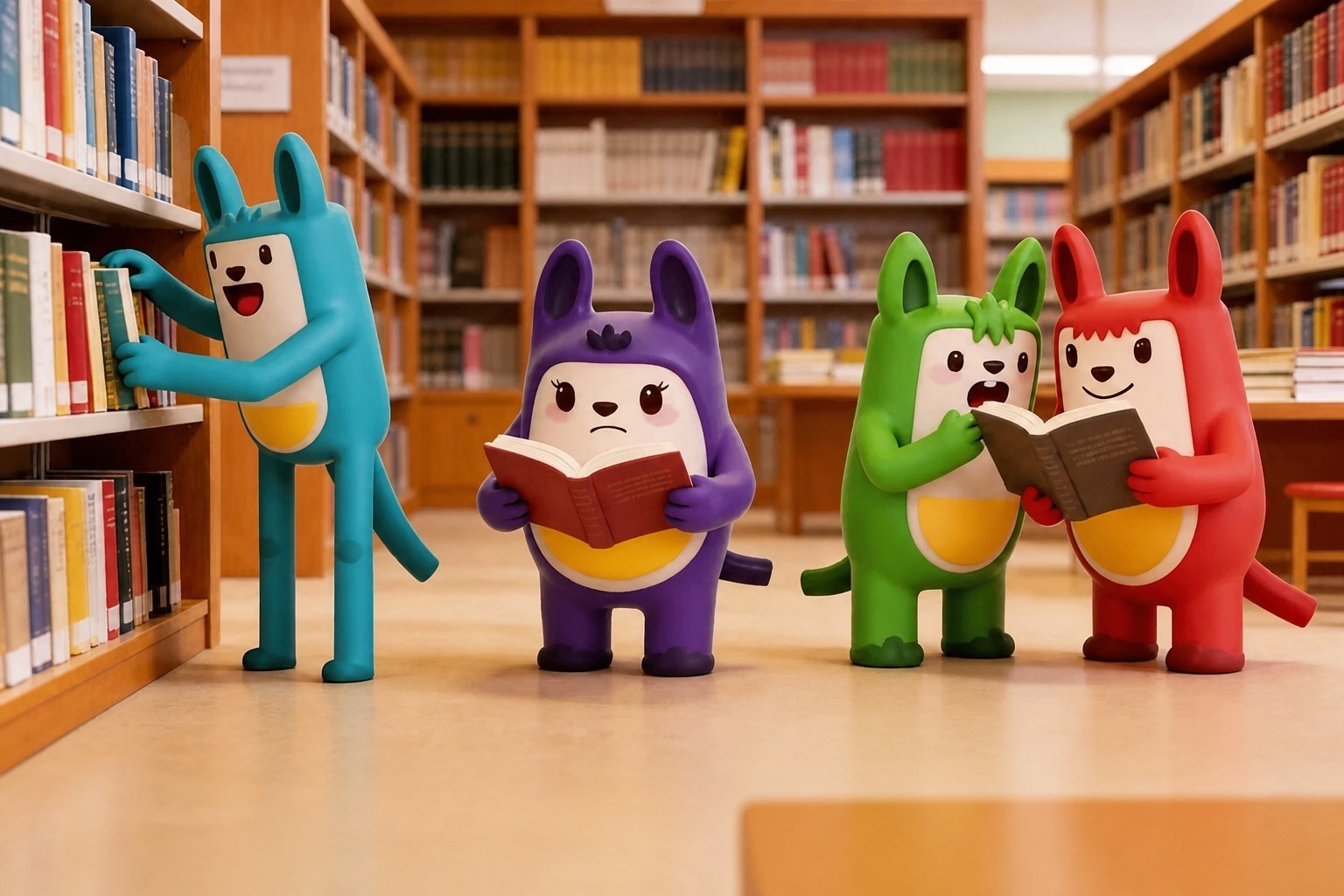
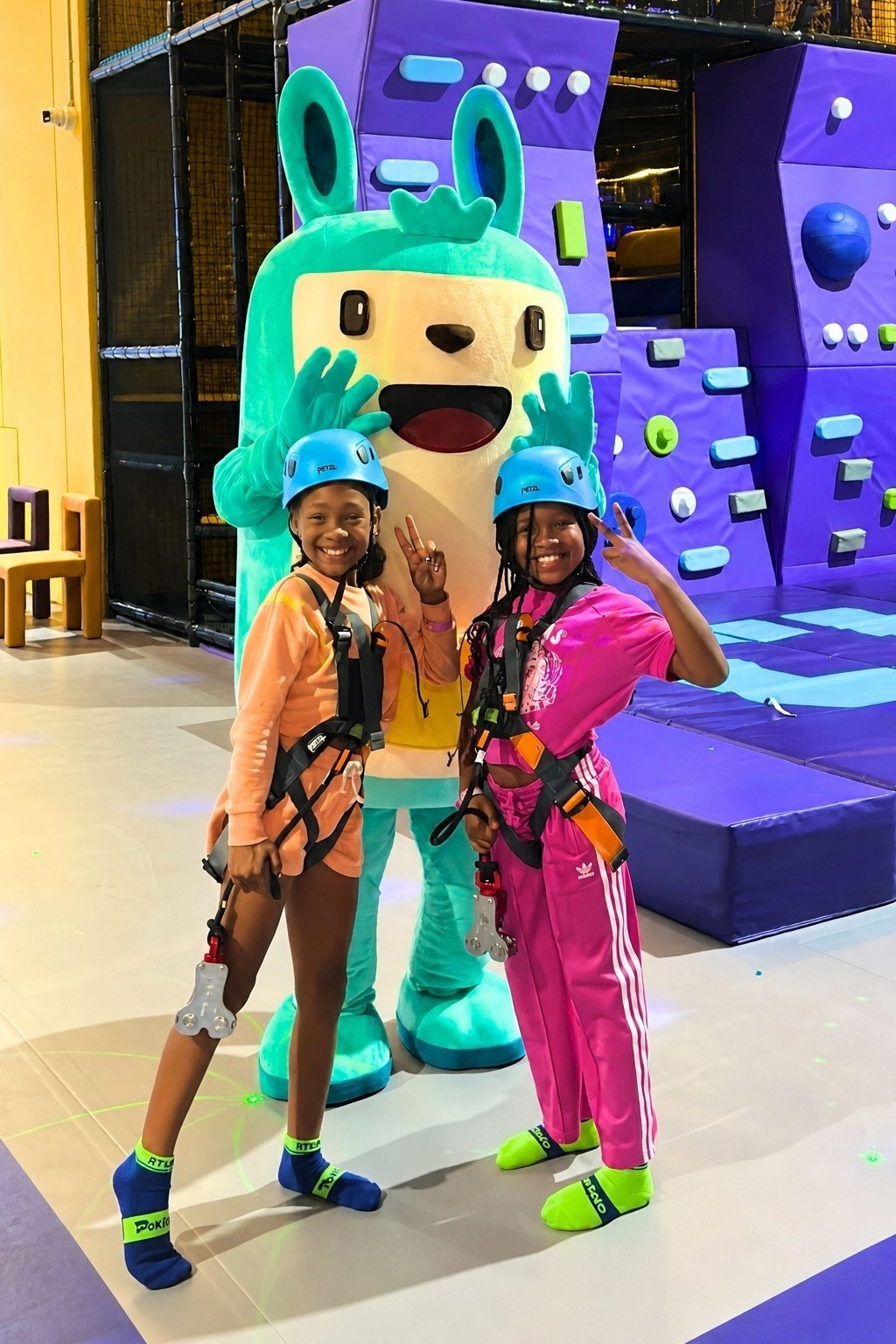
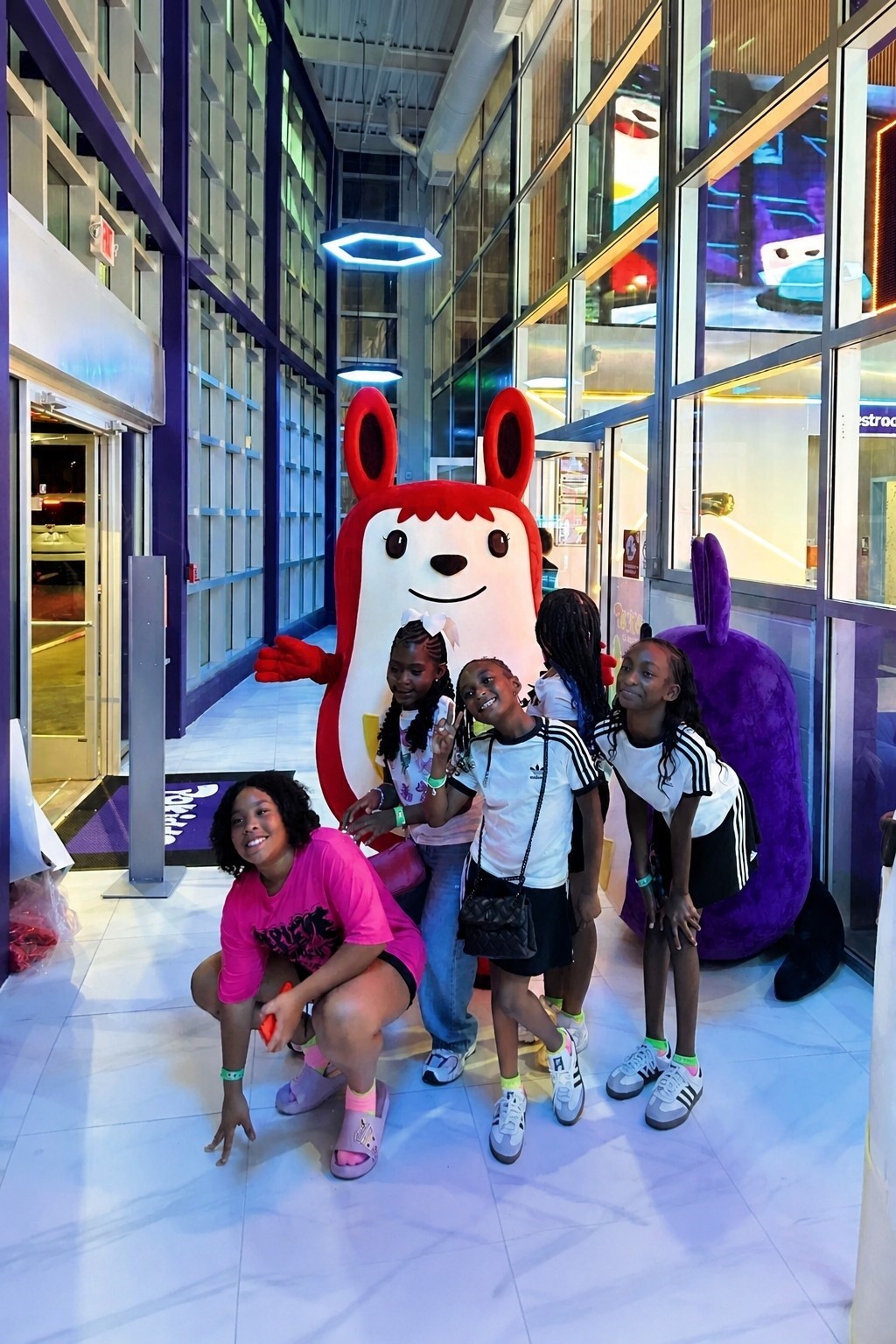
I'm Katie, and I get asked about this a lot, because everybody in this industry seems to have an IP these days. But there's a big gap between having a cartoon and having characters that kids sprint toward. I mean, our POPO, KIKI, DODO, and ONEAL get swarmed. Kids line up for photos. And when it's time to leave, some of them genuinely get upset about it.
So what's the difference? It's pretty simple once you see it. We never thought of our characters as a logo, and we still don't. We run them like they're real people, because to the kids, they basically are.
The Story Came First. The Drawings Came After.
Most parks do this backwards, honestly. They get a designer to draw something cute, then they give it a name, then they try to invent a backstory to justify it. You can always tell. There's no root to it. It's a mascot with a name tag, not a character.
Ours started with two ideas, and both of them were pockets. One was a kangaroo mom's pouch, because that's kind of what safety and love look like. The other one was Doraemon's magic pocket, because that's what imagination looks like.
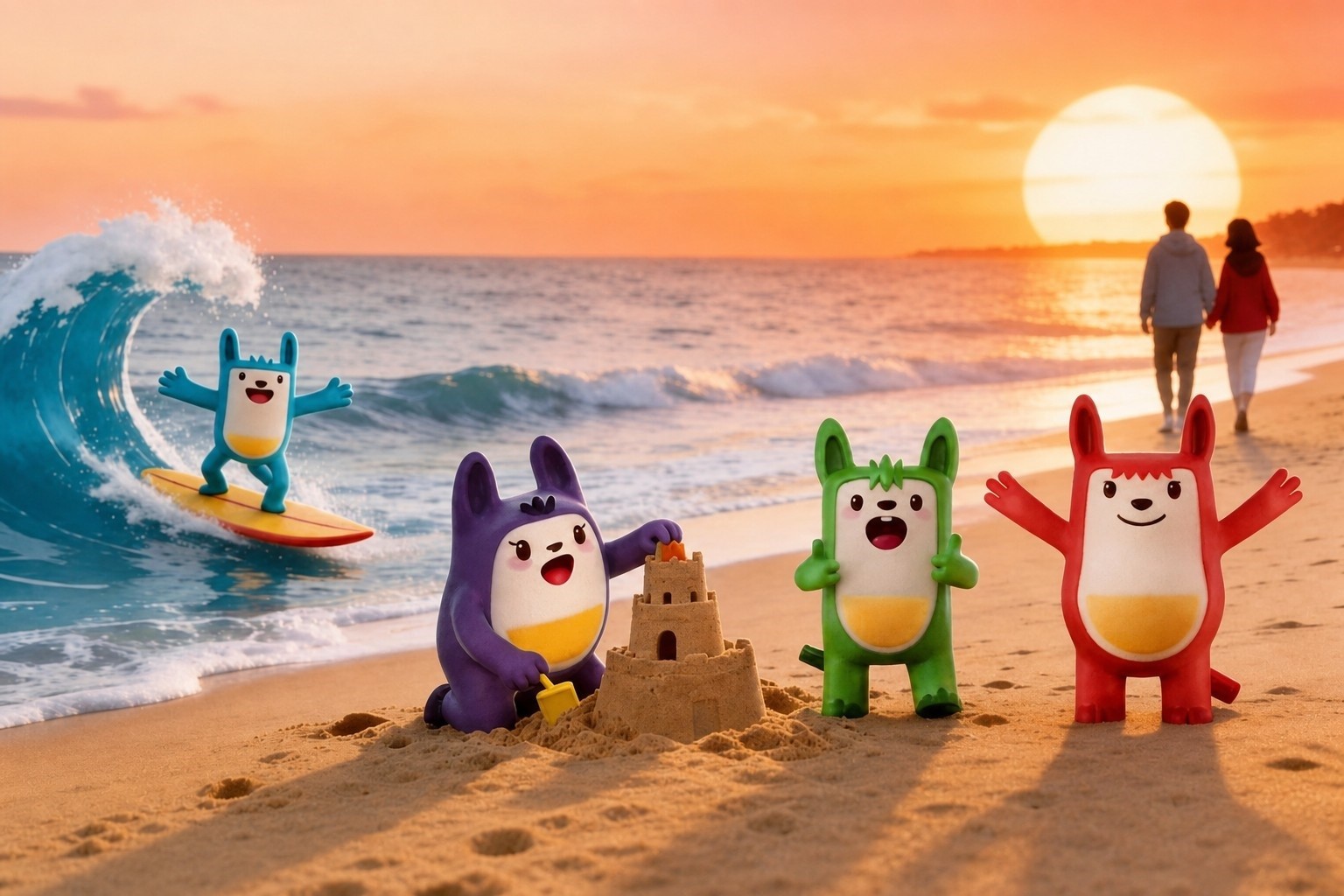
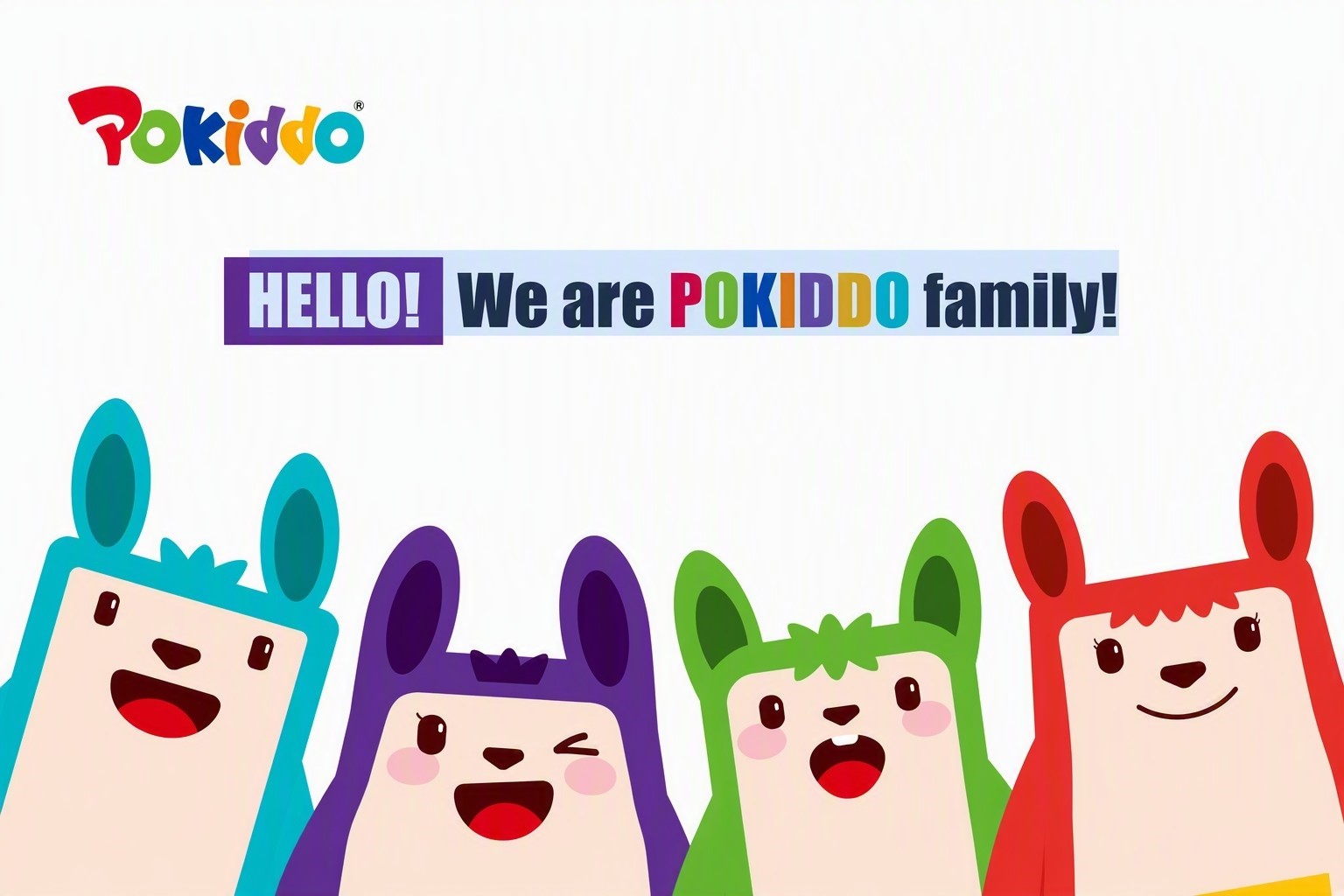
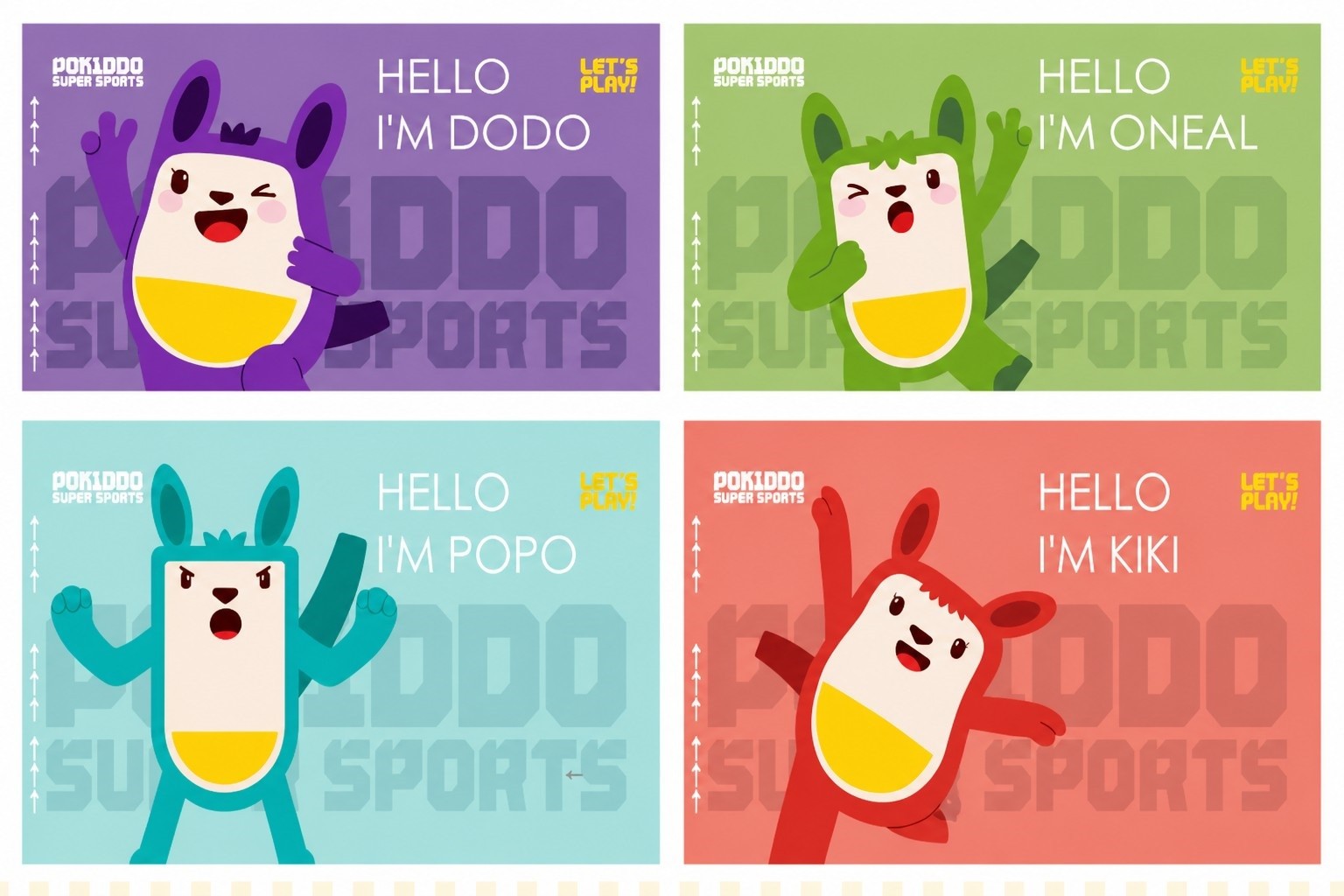
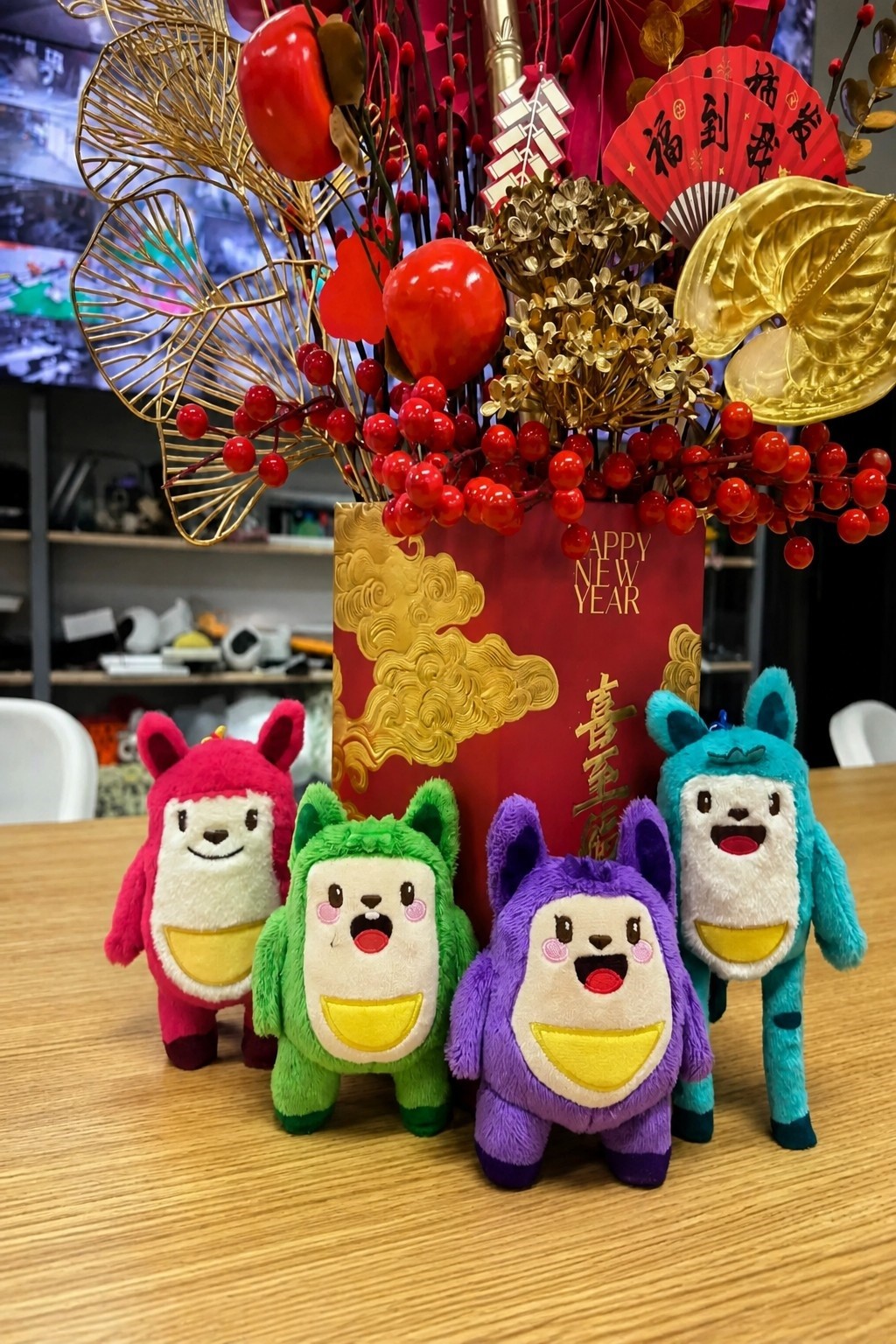
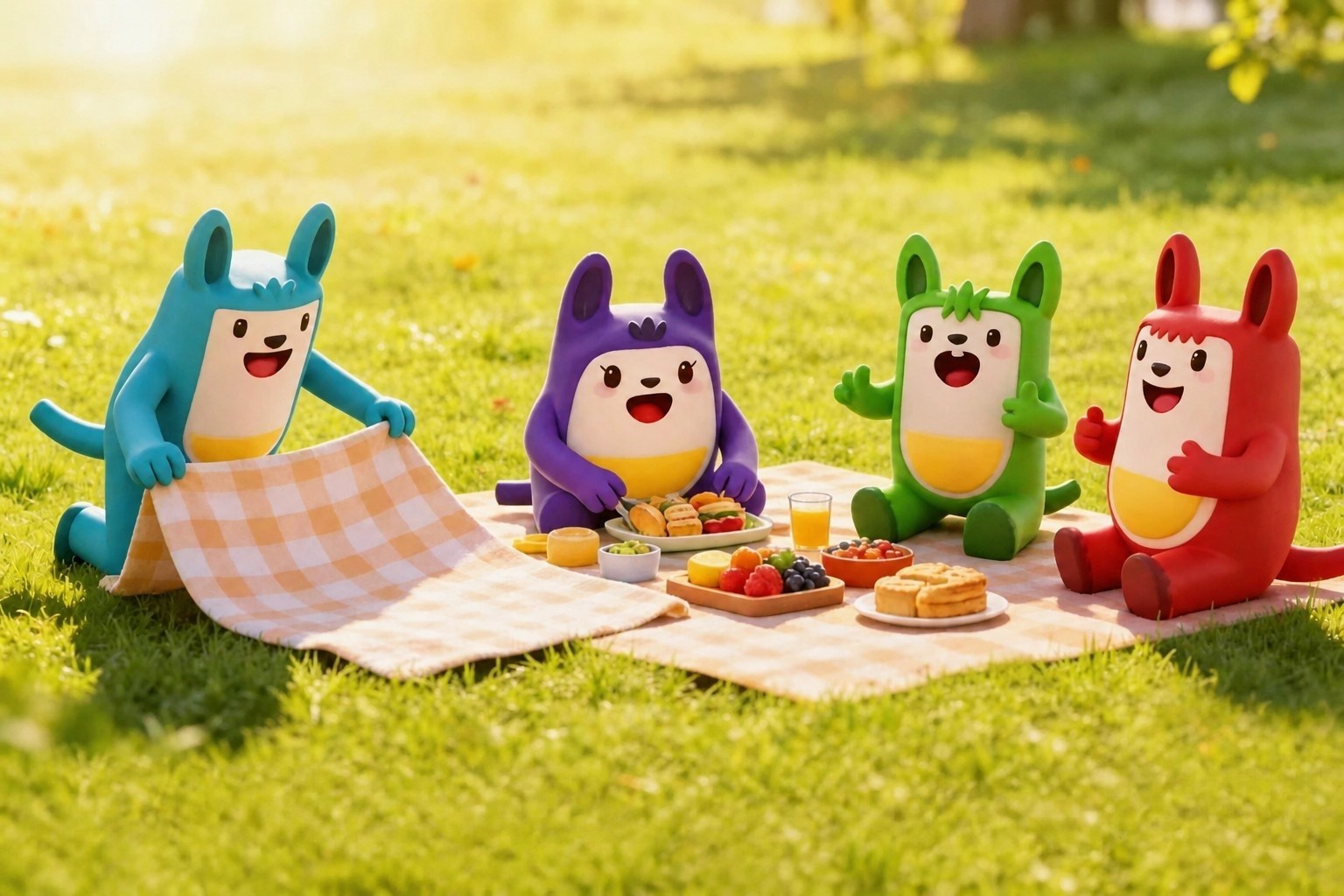
So we built a whole family out of those two ideas. POPO's the dad, he's blue, he's got these long legs and he's super sporty. KIKI's the mom, she's red, she's warm and she's an amazing cook, and honestly her hugs are famous at our parks. DODO's the daughter, she's purple, she's loud and brave and always the first one to try something scary. And ONEAL is the little brother, he's green, he's quiet and gentle, and his thing is going "let me try, let me try" even when he's nervous.
Our designer He spent real time on each one. Birthdays. Personalities. Catchphrases. What they like to eat. What scares them. They bicker, they make up, they go on little adventures, they celebrate holidays together.
There's actually a simple test for whether an IP has a soul, and it's this: can a kid tell you the character's story? Because if they can, that means the character's real to them. Ours can. One little boy told POPO at his own birthday party that his wish the year before had been to meet him. That's when we understood these characters had made a home in kids' heads.
It's Not Enough to Be Seen. Kids Have to Interact.
A lot of park IP just lives on walls, and tickets, and brochures. A kid looks at it, thinks it's kind of cute, and that's the whole interaction. It's decoration you can look at.
Ours is different because the characters actually move through the park, and kids can do things with them.
In story time, POPO runs the adventure and stops to ask the kids which way they think they should go, and suddenly they're not just watching, they're deciding. In the challenge zones, KIKI pops up on the screen to yell "try again, I believe in you" when a kid misses, and so the kid isn't alone up there, there's a friend cheering. At birthday parties, DODO shows up out of nowhere and helps cut the cake and plays games and takes photos, and for a lot of kids that moment becomes the whole highlight of their year. And on the membership badges, ONEAL travels with the kid and marks every achievement, so when they finish the ninja course for the first time, there he is, grinning at them.
So it goes from being seen, to being played with, to being a friend. That last step is where the magic is.
This Is Honestly the Best Retention Tool We Have
We've watched this happen over and over at our locations, and it's kind of remarkable.
Kids start asking to come back, and it's not because mom is pushing them. It's because the kid themselves remembers and goes, "when are we going to see POPO again?" That's a completely different kind of visit. Parents also don't mind paying more, and I mean noticeably more, for the IP birthday party, or the limited edition merch, or the top tier membership.
Our US team looked at the numbers and IP parties just outperform regular parties, both in spend and in satisfaction. And the reason isn't complicated. Parents aren't paying for a party. They're paying for the picture of their kid blowing out candles next to POPO, the one they'll still smile at in ten years.
One mom told us her daughter is usually really shy, but DODO took her hand and danced with her and she laughed so hard. When they got home she drew a picture of her and DODO and said that's her best friend. Stories like that are why we keep saying IP isn't a marketing gimmick, it's genuinely how kids form attachment to a place.
What This Does for a Park
So here's the practical version of what all this does.
It takes a park from being somewhere kids are happy to visit, and turns it into somewhere they actually think about during the week. The equipment gives you the fun, but the staying power comes from something else entirely. When a kid treats a character as their friend, you have something no competitor can copy. Not the hardware, not the layout. A spot in that kid's head and heart, and nobody can rent that out from under you.
How We Actually Built This
It's not like we flipped a switch. It took years.
We started with one story, and one character who had a real background. Then we planned out where the characters would show up, what zones they'd appear in, what they'd say, what they'd do. Then we layered on the merchandise, the badges, the themed parties, the holiday events. Every single step was just deepening the bond between the kid and the character.
We call it an IP ecosystem internally. It's not one image. It's a whole system of stories, interactions, and products, and the system is what makes the characters feel alive.
The Business Side, Since I Know You're Running Numbers
Okay so now the practical part, because I know exactly what you're comparing.
When investors line up trampoline park cost quotes, they're mostly comparing the same hardware from different factories, and when you're looking at trampoline park franchise cost versus building your own, IP almost never comes up in the spreadsheet. But it's actually one of the few things that appreciates over time. Every year the characters stay active, they get more valuable, because more kids grow up with them.
That's why we tell people a good indoor trampoline park design should save real space for IP touchpoints, a story corner, a meet and greet spot, a photo wall. Those aren't decoration, they're the parts of the building that generate the repeat visits.
And look, the trampoline park equipment matters, sure. But any factory can sell you the same list of equipment. They can't sell you your characters' stories, because those belong to you.
If you're figuring out how to start a trampoline park, here's the honest advice. We're a trampoline park manufacturer, we've watched venues on four continents try to compete on hardware, and it doesn't end well for most of them. The ones that survive own something emotional. Hardware gets copied, but a character that kids love, that's basically impossible to copy.
That's the real barrier around your business. And it's why kids line up for photos.