A Factory That Can't Run a Park Is Just Selling You Steel
Here's a sentence I keep coming back to: if a supplier can only talk about steel thickness, but can't tell you how their equipment will keep a family coming back—that's not a partner. That's a vendor.
For someone crossing into this industry, buying equipment is the easy part. Turning it into a business that actually makes money? That's the hard part.
I'm Katie. Investors ask me all the time: when you visit an equipment factory, what should you actually look at?
My answer: if they only walk you past the welding line, the foam workshop, the paint booth—stop and ask yourself one question. Does this person know how to run a park?
Because making equipment is not the same as operating a venue. And the soul of a park was never galvanized pipe or padding. It's content. It's service. It's the atmosphere that makes a family want to come back next Saturday.
Why So Many Parks Peak at Opening Day
We've seen this pattern more times than I can count. Great equipment. Beautiful fit-out. Packed opening weekend.
Three months later, traffic drops. Six months in, the operator is panicking.
The equipment didn't break. The operations did.
Think of equipment as the skeleton. What brings it to life is the system around it: how staff are trained, how events are planned, how members are retained, how complaints are handled, how peak hours are managed, how slow seasons are filled.
That's what decides whether a family returns. If your supplier only knows production, they're handing you a pile of immobile machines and a wave goodbye. Everything that makes it run? You're figuring that out from scratch. For a first-time investor, that's starting the game on hard mode.
Why Pokiddo Is Different
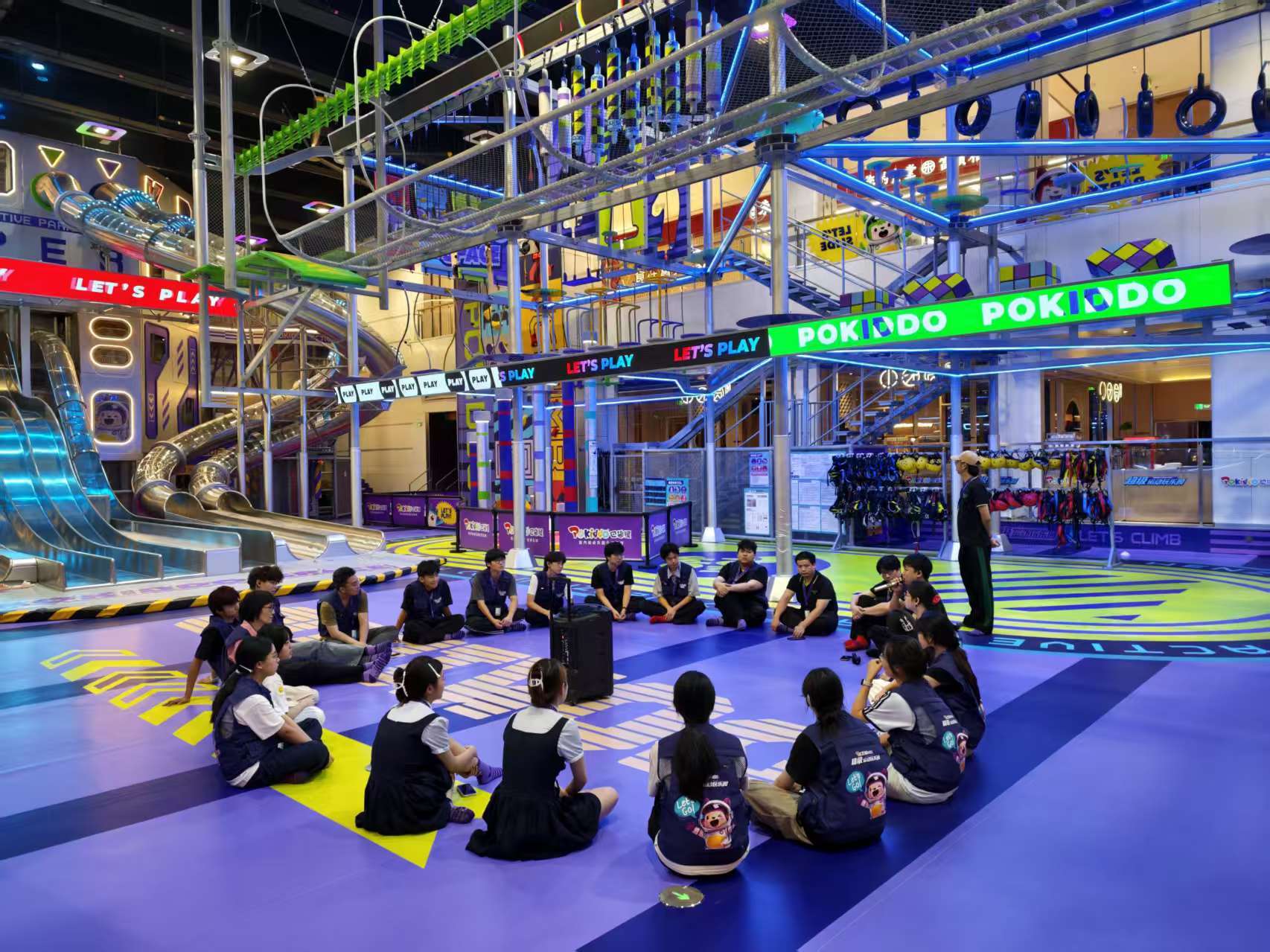
Our team started operating parks ourselves in 2017. We've opened stores that succeeded. We've stepped on rakes that hurt. Store by store, the hard way.
So when we talk to investors, we don't just quote a price. We ask the questions that actually matter:
Is the surrounding family customer base strong enough for this location? What activity mix gives the best return per square meter at this size and ceiling height? What should the first three months of operations focus on? When a parent complains, how should your staff respond?
Those answers came from our own venues. Our project managers double as operations consultants. When we design a park, we're not just thinking about ceiling height and aesthetics. We're thinking: what monthly events can this space host? How do we structure challenges so kids feel a sense of progression? Can a staff member stand here, see the whole floor, and respond to parents instantly?
We call it designing backward from operations. Because we've run the stores, we know which designs make operations smoother. Which details make a kid stay a little longer. Which arrangements put parents at ease.
What We Actually Deliver
So what does a partner actually receive from Pokiddo? Not a stack of equipment. A proven, replicable operating model.
Equipment is the bones. What brings a venue to life is the rest of the body:
Standard operating procedures—from opening to closing, what every role does every day. A staff training system—how to hire, train, evaluate, and keep people. A full-year marketing calendar—what events run for each holiday, what products fit each season. A membership system—how to turn casual visitors into members, and members into regulars. A complaint-handling flow—how to respond, and how to turn a bad moment into a good one.
That's what keeps a park profitable beyond the opening buzz. We're not just installing equipment. We're helping a cross-industry investor go from an empty space to a thriving venue.
Why We Back It With a 5-Year Warranty
One more thing worth mentioning. We promise proactive maintenance and a five-year warranty.
That's not a marketing line. It's because our profit model doesn't depend on cutting corners.
A lot of factories compete on low price. Equipment ships, the story ends, maintenance gets delayed whenever possible. We can't afford that. We're in the repeat business. We want our partners to make money on store one, so they come back for store two.
So we build the equipment a little more durable. We maintain it a little more proactively. That's not a cost. It's an investment in trust.
What to Actually Look For at a Factory
Next time you're on a factory tour, look past the machines. Ask about the trampoline park equipment testing standards. Ask about failure rates. But then ask the questions that matter more.
Ask how they'd help you with how to start a trampoline park in your specific market. Ask what their indoor trampoline park design process looks like—do they design for operations, or just for looks? Ask what happens after opening day.
Because here's the uncomfortable truth about the trampoline park cost conversation: the cheapest quote in front of you is never the cheapest option in the long run. And the trampoline park franchise cost comparison only matters if the model you're buying actually fits your market.
As a trampoline park manufacturer with venues across four continents, we've seen what separates parks that fade from parks that last. It's not the equipment list. It's whether someone taught the operator how to run the place.
The Bottom Line
If you need equipment, a hundred factories can sell it to you.
If you need a profitable park, you need a partner who's been in the trenches.
That's the difference between a supplier and a system. And it's the difference between a park that peaks at opening day and one that's still busy five years later.