
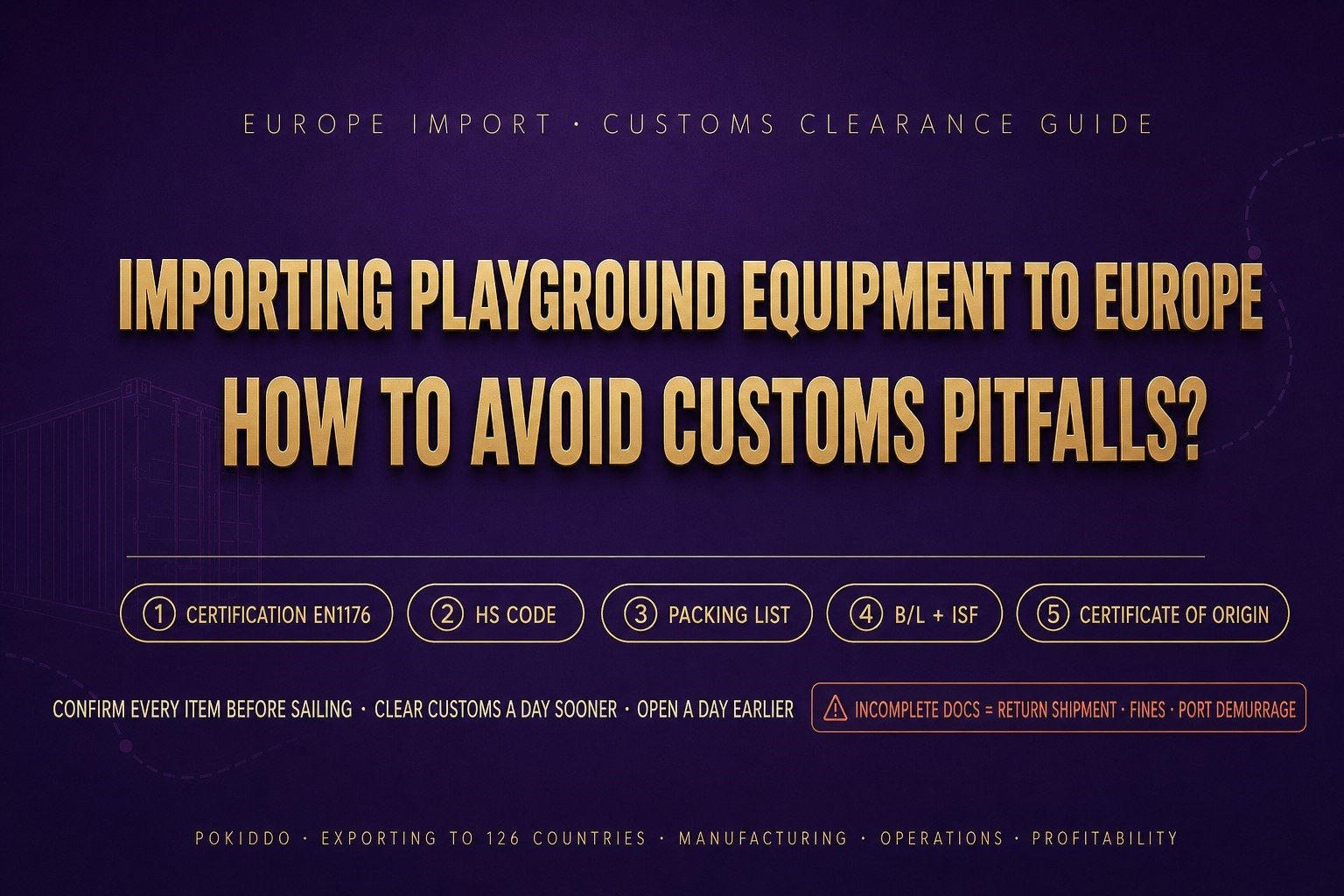
Importing Play Equipment to Europe? Your Customs Paperwork Can Burn Money Daily
Last year, one of our overseas clients was rushing to open. He asked our installation crew to fly over early. Before departure, we sent a complete checklist. Item by item, he confirmed everything. "Has your cargo cleared customs?" "Almost," he said.
The crew landed. The cargo was still sitting at the destination port.
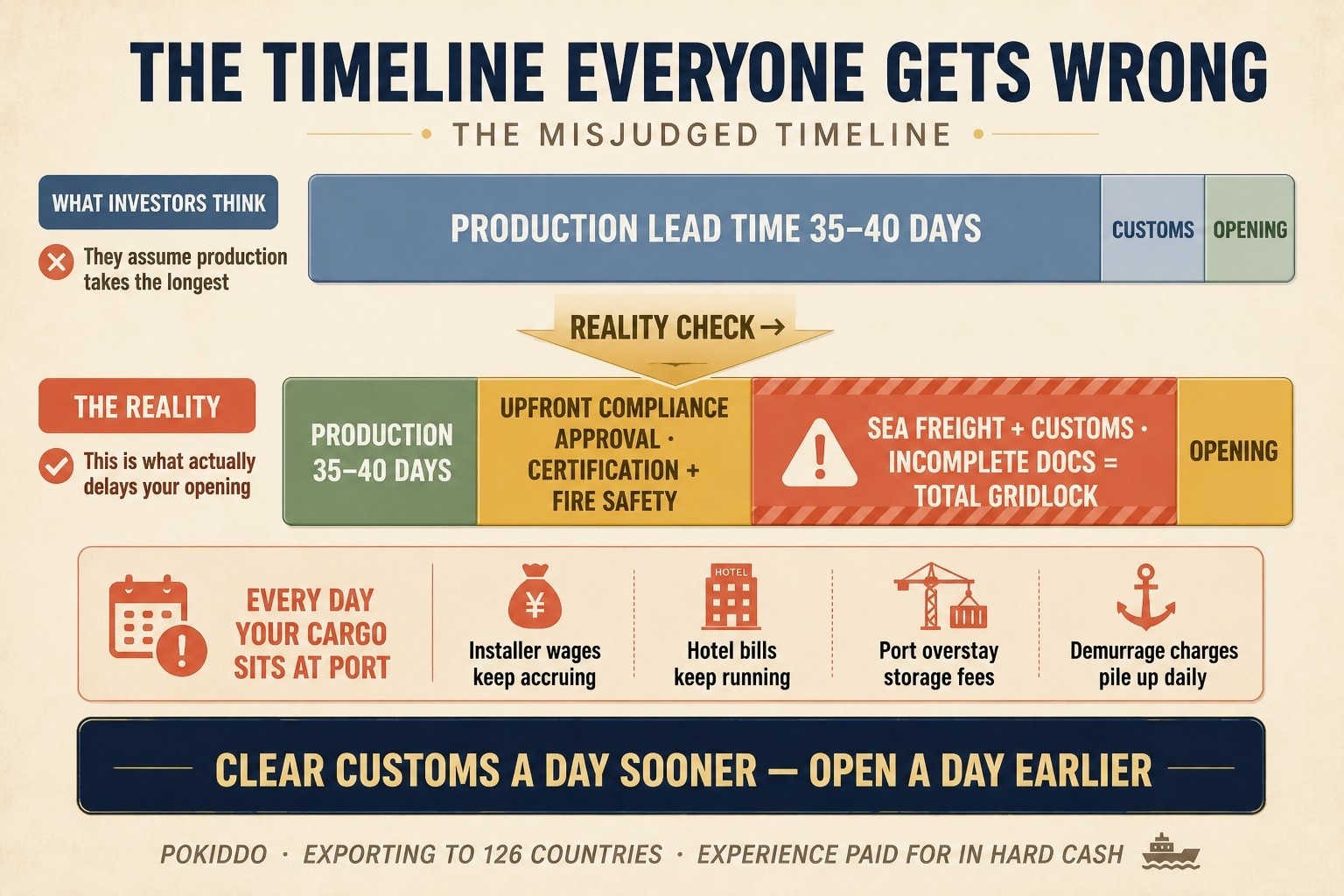
Every day after that, the costs stacked up: installers' wages, hotel bills, port storage fees, demurrage charges. The team had nothing to do but wait. And the reason? The documents had already been issued in original form when the client suddenly wanted changes. Once the originals are out, customs clearance can't move until everything is re-verified. One small oversight, and the whole project timeline shifted.
That's the kind of mistake that makes investors lose sleep. Let me walk you through how to avoid it.
The Time Equation Everyone Gets Wrong
European and American investors assume the 35–40 day production lead time is the longest part of importing play equipment from China.
That's completely wrong.
What actually stalls your opening—and can even block your business license—is upfront compliance approval and maritime customs clearance.
Pokiddo has exported to 126 countries: Germany, Spain, New York, Toronto, and beyond. Every one of those experiences cost real money to learn. Here are the five documents that matter most, and what to check before the ship even sails.
1. Certifications: The Most Lethal Document
Too many clients discover at the port that their supplier can't produce a genuine EN 1176 (European) or ASTM (American) certificate.
Without the certificate, customs sends the goods back—or destroys them. No negotiation.
Here's the rule: don't check certifications before shipping. Check them before you even choose the supplier. Ask them to send the certificates in advance. Genuine certificates carry a QR code that leads to the TUV or SGS official website for verification.
2. Commercial Invoice: The HS Code Is Everything
Name, quantity, unit price, total value—and the single most critical item: the HS code.
Get the HS code for play equipment wrong, and you're looking at punitive tariffs at best, or seizure for suspected under-declaration at worst.
3. Packing List: A Clean List Clears Fast
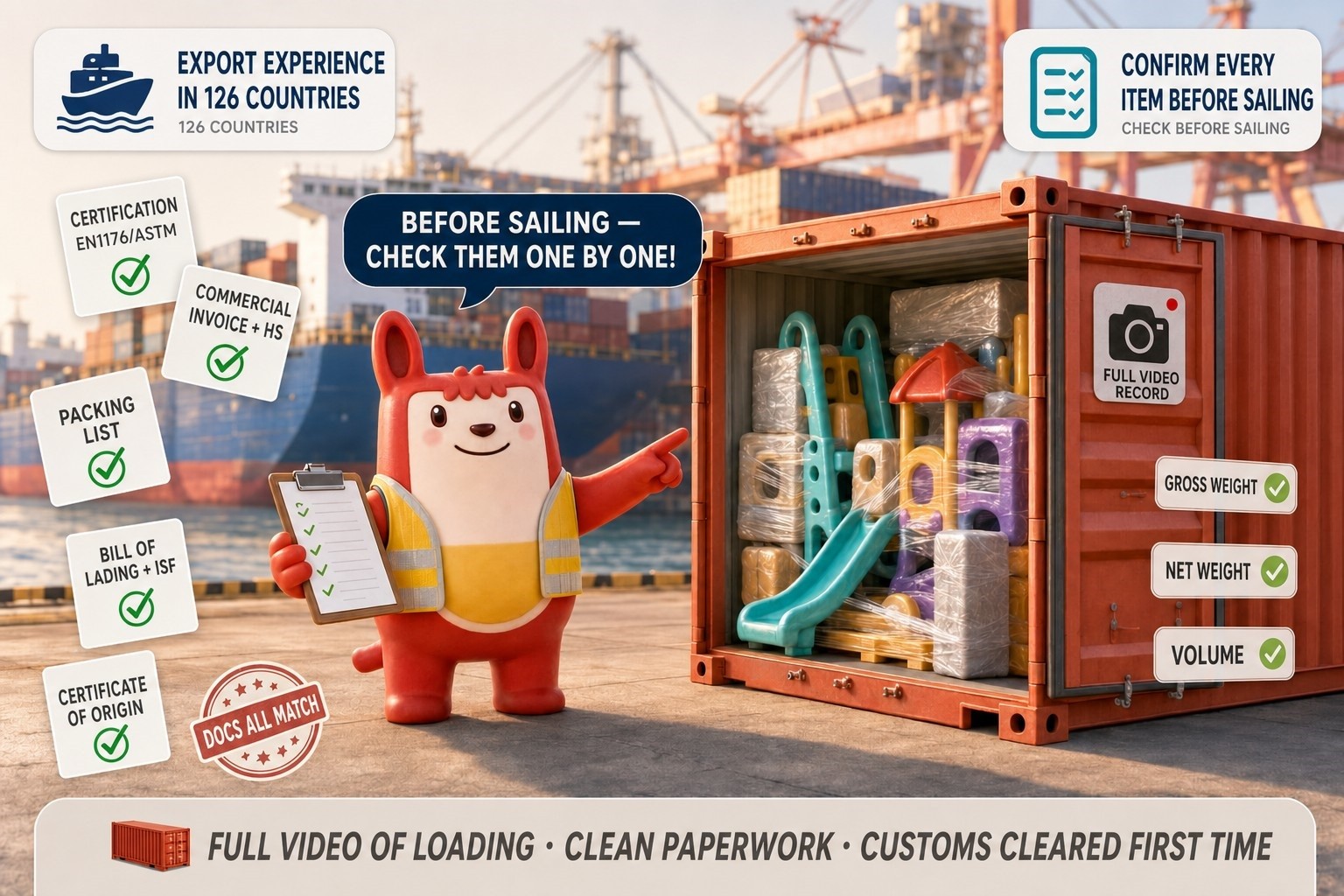
What's in each box, gross weight, net weight, volume—all of it must be crystal clear.
At Pokiddo, we record every container loading on video. Nothing gets missed, nothing gets mis-shipped. When customs inspects, the list is clean and the container passes on the first check.
4. Bill of Lading and Advance Declaration: Everything Must Match
The bill of lading must match the invoice and packing list exactly. Customs calls this "document-to-document consistency."
There are also country-specific rules most people don't know. Shipments to the US require an ISF filing (the 10+2 rule) at least 24 hours before departure. Forget it, and the vessel arrives to a $5,000 fine. No exceptions.
5. Certificate of Origin: The Money Saver Nobody Uses
Most investors ignore this one, but it's a cost-saving weapon.
Ship to ASEAN countries or Australia with a certificate of origin, and you can get significant tariff reductions.
The One Step That Avoids 90% of the Trouble
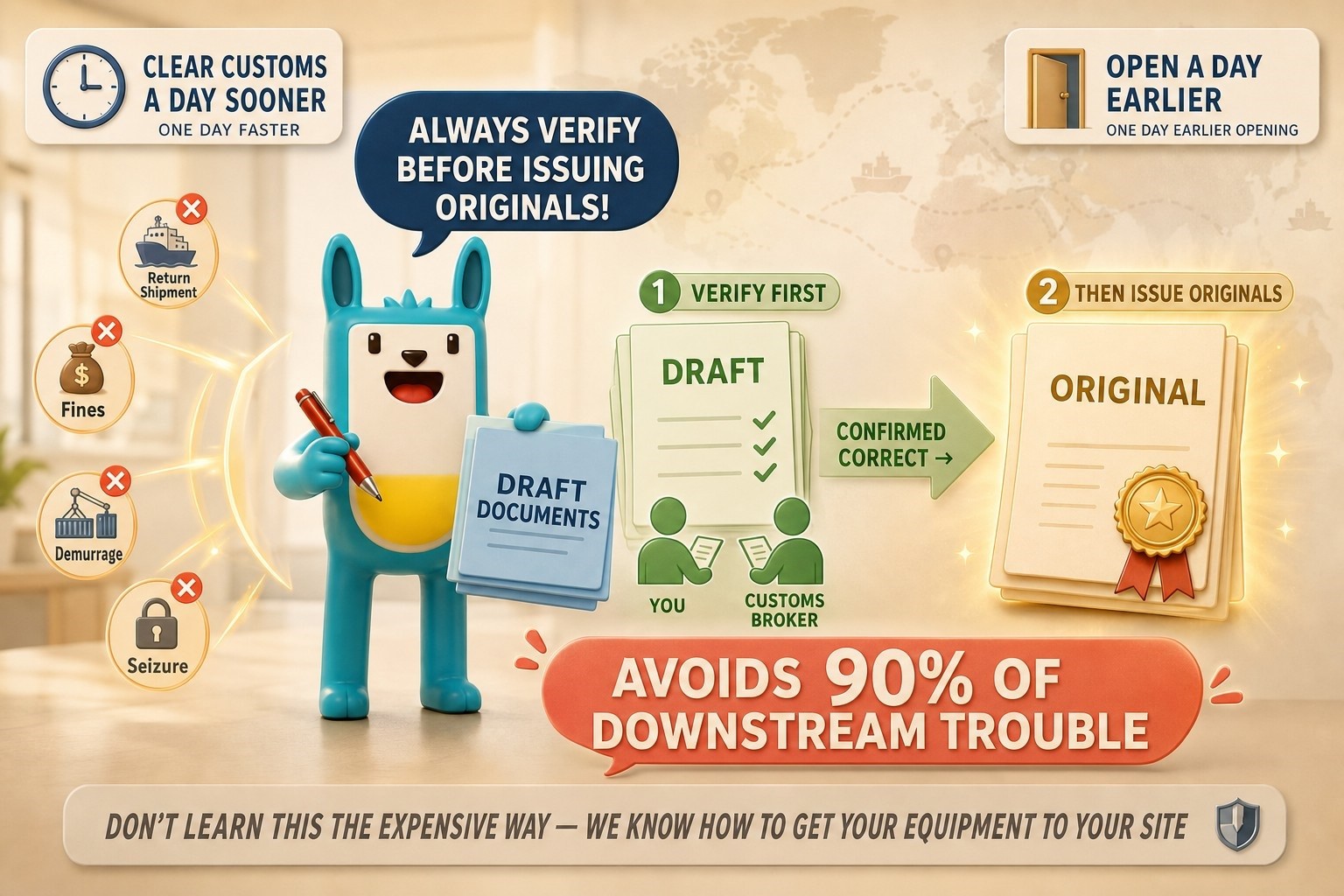
Here's the Pokiddo rule: before issuing any original documents, our project managers send all draft paperwork to you and your customs broker for review. Only after everything is confirmed do we issue the originals.
That single step eliminates 90% of downstream headaches.
One day faster in customs means one day earlier opening.
If you're planning to source play equipment from China and still have questions about compliance, customs, or fire safety—don't gamble your money on trial and error. We run 60-plus branded venues worldwide and have exported to 126 countries. We know how to get equipment to your site safely and efficiently.
The Bottom Line for Investors
When you research how to start a trampoline park with imported equipment, add customs planning to your timeline from day one. The trampoline park cost projection that ignores port delays is a fantasy. Every week stuck at customs is a week of rent, wages, and no revenue.
Ask your supplier directly: are EN 1176 or ASTM certificates included with the trampoline park equipment? Do you review draft documents with my customs broker before issuing originals? These questions separate real trampoline park manufacturer partners from middlemen.
A proper indoor trampoline park design and the right trampoline park franchise cost comparison mean nothing if the container can't clear the port. The documents are the invisible half of your project.
Clear customs one day faster, open one day sooner. That's the whole game.