
The KonMari Method for Park Operators: Does This Project Spark Joy?
I've been reading a book about tidying up. You probably know the one—the whole "does this spark joy?" method. And somewhere around the third chapter, I stopped thinking about my wardrobe and started thinking about park operations.
Because the core insight is the same. Decluttering isn't about organizing what you have. It's about being honest about what actually belongs.
Tidying Is Really About Subtraction
Most operators I talk to think "improving the park" means adding something. A new zone. Another piece of trampoline park equipment. A different activity format. If trampoline traffic is down, add climbing. If climbing is slow, add foam pits. If foam pits aren't pulling their weight, add a party room.
I've watched this happen a dozen times. The park ends up with eight zones, each mediocre, and a team stretched too thin to do any of them well.
The book makes a point that cuts through this: you don't start by buying more storage boxes. You start by throwing things out. Only then do you discover what actually needs a home.
For a park, that question looks like this: when did someone last use this zone? Is this piece of indoor trampoline park equipment earning its floor space, or just occupying it? If this project disappeared tomorrow, would your regulars notice—or even care?
That's a harder question to sit with than "what should we add." But it's the right one to start with.
The "Maybe Someday" Problem
Here's a pattern I see constantly. The storage room full of equipment that "might be useful later." The activity templates from three years ago that "could work for the right campaign." The zone that hasn't had a customer in two months but gets kept around because "once the season changes, it'll pick up."
Maybe. But probably not.
There's a question from the book I find useful to steal: have you used this in the last three months? If the answer is no, the odds are high the answer will still be no in another three months. The things we keep "just in case" rarely become the things we needed.
This applies directly to thinking about trampoline park cost management. Dead inventory, underused floor space, overstaffed zones—these are the hidden costs that don't show up in obvious ways but quietly erode margins month after month. Clearing them out is uncomfortable. It's also usually overdue.
Visibility Is Its Own Kind of Decluttering
One of the more surprising ideas in the book is about clothes. The advice is to stand them up vertically in drawers rather than stacking them. The reason: when things are stacked, you only see what's on top. The rest gets forgotten.
Walk around your indoor adventure park and look at it through that lens.
Is your strongest zone in the right place—where a family walking in sees it immediately? Or is it tucked in a back corner where people only find it by accident? Are your promotions visible where customers actually look, or buried in a newsletter they didn't open? Is the new activity you're most excited about announced at the entrance, or hidden behind the sign for something from last season?
The goal of indoor trampoline park design isn't just flow and safety. It's about making your best things visible. When customers have to work to find what's good, most of them won't bother. They'll just leave with a vague sense that the park was fine.
Do a Full Audit, Not Piecemeal Fixes
The book is insistent on one thing: you don't tidy room by room. You gather everything of the same category first—all the clothes, all the books—and you deal with the whole category at once. Only then do you actually understand what you have.
The equivalent for a park: stop patching problems individually. One week you fix the trampoline area. Next week you adjust staffing for the party zone. The week after that you tweak the front desk flow. It's exhausting, and you never get a clear picture of what you're actually working with.
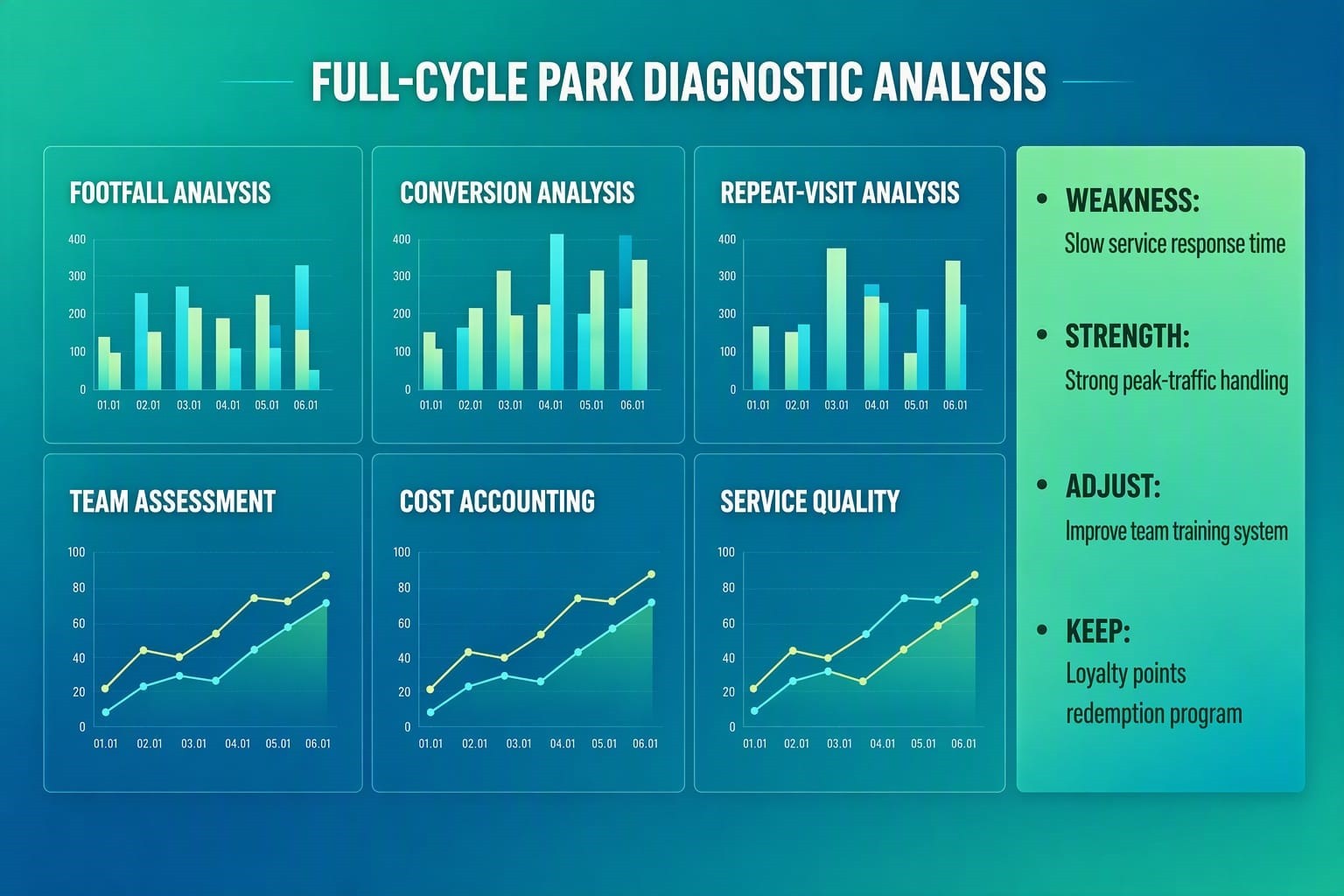
Instead, block out time to audit the whole operation at once. Customer flow from entry to exit. Conversion on different zones and packages. Staff utilization across shifts. Cost per square meter by zone. Complaint patterns over the last quarter.
When you look at everything together, the real story appears. The zone that looked fine in isolation turns out to be the bottleneck. The upsell that seemed to underperform was actually working—it was just placed wrong.
This is the kind of work that actually changes things. It's also the work that most operators keep deferring because there's always something more urgent.
What Gets Clarified in the Process
The tidying book closes with something I've been thinking about since I read it: the goal isn't a tidy space. The goal is clarity about what you actually want.
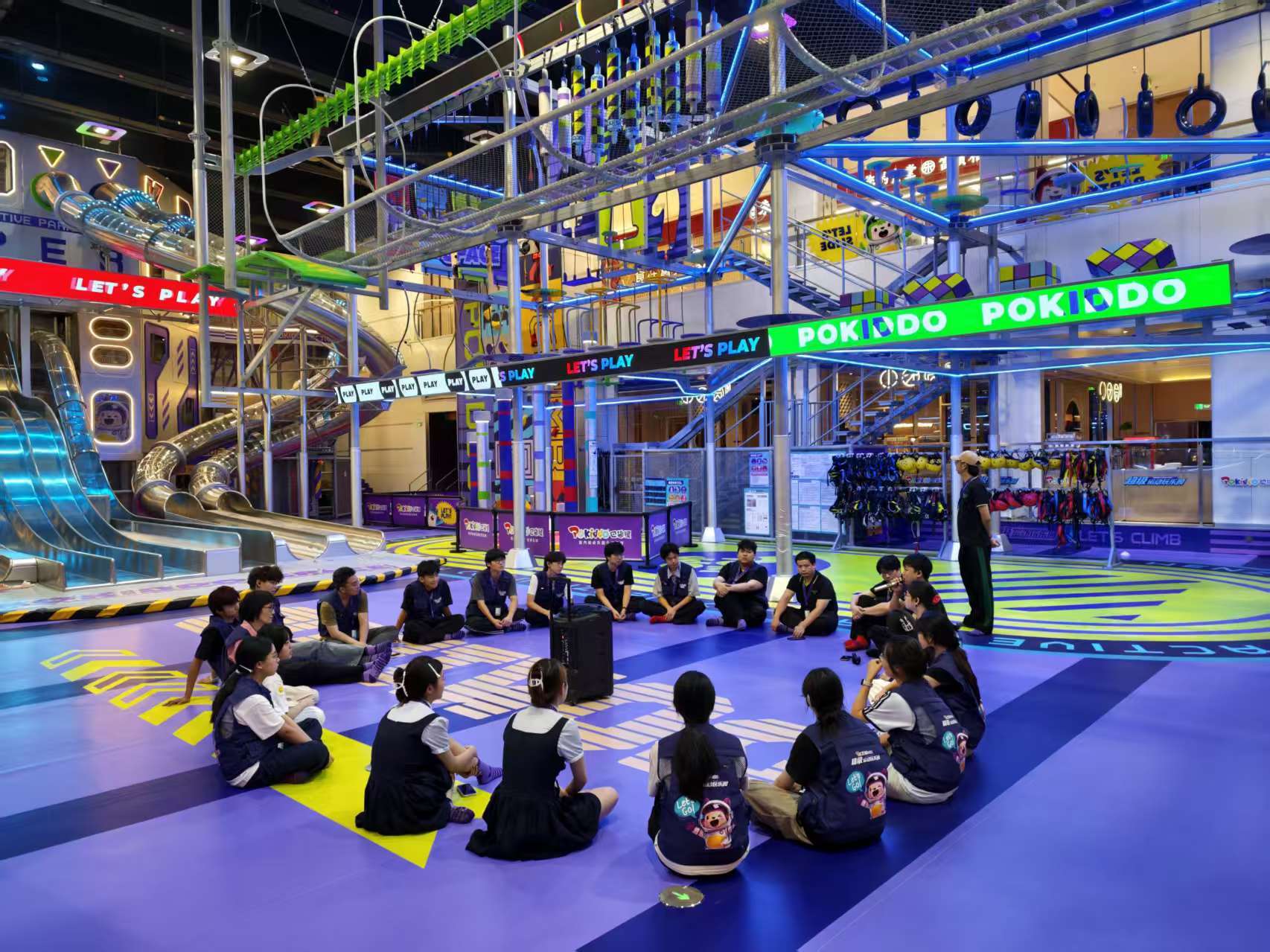
After running a proper declutter of your operations—cutting the projects that aren't working, getting clear on which customers you actually serve best, figuring out who on your team you're genuinely building with—something shifts.
As a trampoline park manufacturer that has worked with operators across markets from Southeast Asia to Europe to the Americas, we've seen this pattern consistently. The parks that figure out how to start a trampoline park successfully long-term aren't the ones with the most equipment or the most features. They're the ones where the operator is clear on what they're doing and why.
When you're clear on that, the trampoline park franchise cost question—whether to grow independently or under a brand—becomes much easier to answer. Because you know what you need support with and what you can handle yourself.

A Note on When to Do This
You don't have to wait for the slow season. You don't have to wait for something to go wrong.
The right time to do a proper operational declutter is when things feel slightly chaotic but not yet broken. Before the overwhelm sets in. Before the team starts losing energy because there's too much to manage and too little clarity.
What stays, what goes, what gets more focus, what gets less. Lighter operation. Clearer priorities. A team that knows what they're working toward.
That's the whole point of tidying. In a home or in a park—it's the same.