
AI Got 70x Cheaper. Now What?
Everyone in my circle has been talking about DeepSeek V4 this past week. And I mean everyone—not the tech guys, but the actual operators. The people running parks in second-tier cities, the investors who are maybe on their second location, the franchise owners comparing trampoline park franchise cost options at midnight.
I'm not technical. I find the benchmark numbers genuinely boring. But I spent some time trying to figure out one specific thing: does this change anything for someone running a real park, with real staff, and real customers who don't care what model you're using?
Here's where I landed.
The Part That Actually Matters
Three things happened with V4, and two of them are worth paying attention to if you're a park operator.
The supply chain piece is real. It runs on domestic chips now, which means the six-month hardware wait that used to plague AI development is gone. That's mostly a back-end story—you won't feel it directly—but it matters for the stability of the ecosystem you're building on.
The cost change is what's actually relevant to us. Cost per query dropped to roughly one-seventieth of what GPT-4 charged. Which means the AI tools that only made sense for enterprise budgets six months ago are now accessible to a small park operator figuring out how to start a trampoline park without a technology team.
And it can hold more context now—like, a lot more. A full year of sales records. Every staff SOP you've ever written. Six months of customer feedback. You can hand it everything and ask questions against the whole thing at once.
Okay. So that's what happened. Here's what it means in practice.
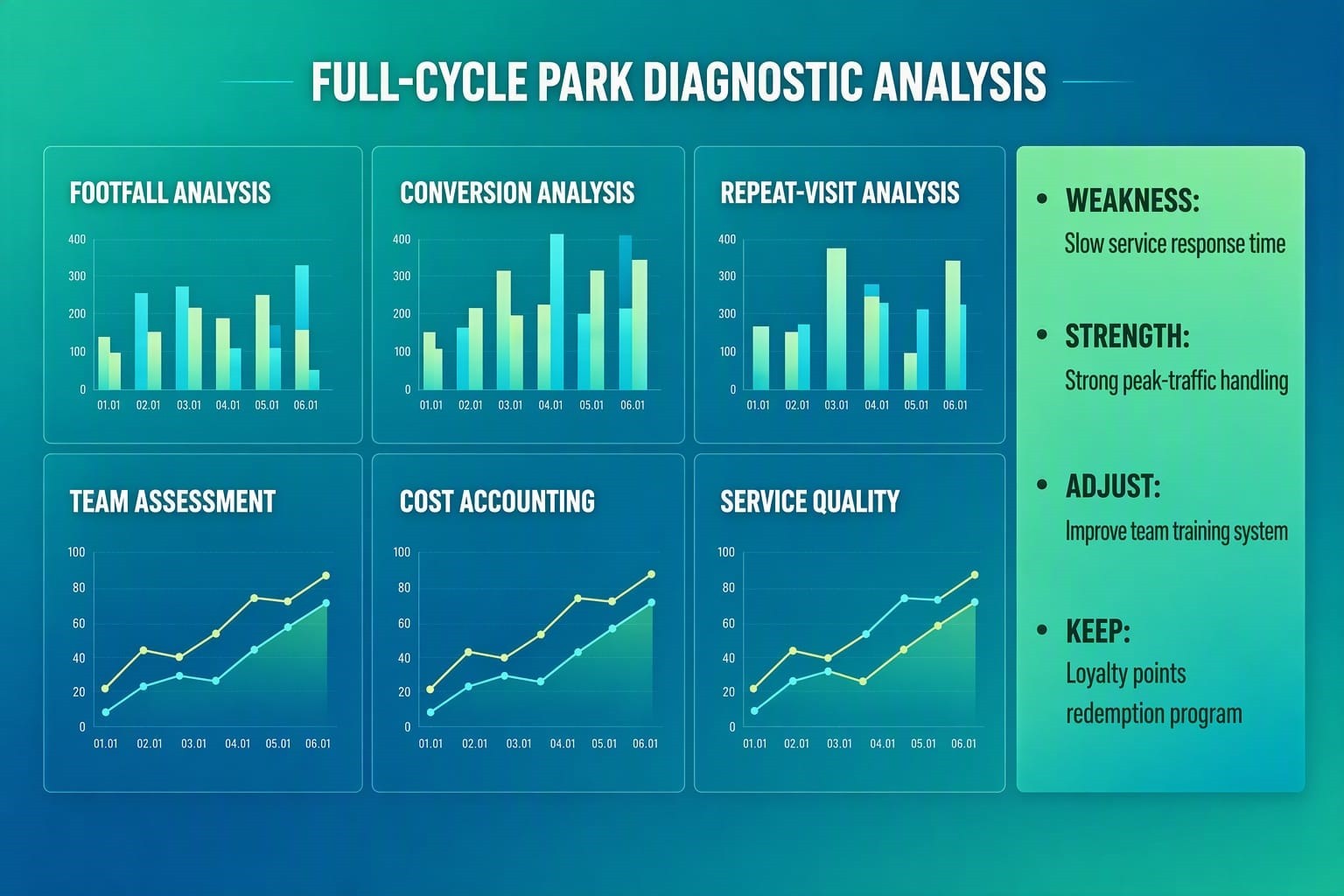
What You Can Actually Use It For
Let me be specific, because "AI can help your business" is one of those sentences that means nothing.
The first place I'd try it: writing. Every park operator I know is permanently behind on writing. Holiday promotion copy. Parent group announcements. Party invitation text. Staff procedure reminders that someone needs to update from two years ago. It takes forever and it's always lower priority than whatever is actually on fire.
With something like V4, you give it context and direction—"write a post for the May holiday weekend, targeting parents of three-to-eight-year-olds, lean into the family time angle, keep it warm not corporate"—and you get a solid draft in under a minute. You still edit it. It's still your voice at the end. But the blank page problem is gone.
The second place: your customer data. Most parks are sitting on records they never actually use. Who came in, when, how many times, what they spent, whether they complained. That data just... accumulates. Nobody has time to go through it.
You can feed an anonymized version of that into a capable AI and ask questions you'd never have time to answer otherwise. Which customer type shows up on weekdays? What's the most-used zone among annual pass holders? What themes keep showing up in complaints? Real answers, fast, from data you already own. Just be careful with privacy—strip personal identifiers, work with patterns not individual profiles.
The third place: onboarding. Every park role has its own procedures, and training new people is always slower than you want. If you have your SOPs documented—front desk flow, safety patrol standards, party host protocol, what to do when a piece of trampoline park equipment breaks down mid-session—you can turn an AI into a queryable knowledge base. New safety officer asks a question at 8 PM. They get the right answer immediately, instead of waiting until someone who knows is available.
What It Can't Do (And This Is the Part That Matters Most)
Here's the thing I keep coming back to when I watch operators get excited about new tools.
A family walking into your indoor adventure park on a Saturday afternoon isn't thinking about what AI system you're running. They're watching whether the person at the front desk seems like they want to be there. They're noticing whether the space smells clean. They're watching their kid's face when they come off the slide.
None of that changes based on your tech stack.
The parks we've helped build and operate as a trampoline park manufacturer across markets in Asia, Europe, and the Americas—the ones that actually last—had one thing in common before they had anything else. They got the basics right. Safe trampoline park equipment. Clean facilities. A team that gives a damn. A well-thought-out indoor trampoline park design that actually flows well for families.
Then they got efficient. In that order.
The trampoline park cost of skipping the fundamentals doesn't show up in the initial setup budget. It shows up in the reviews eight months later. In the retention numbers that quietly slide. In the staff who start cutting corners because nobody's paying attention. You can't AI your way out of that.

So What's the Call?
If you're an operator and you haven't played with any of these AI tools yet—it's genuinely worth your time now. The barrier to entry dropped. The cost is reasonable for a small business. And there are real, boring, unglamorous use cases where it saves you actual hours every week.
But if you're hoping it's going to fix a park that isn't working yet—it won't. Tools extend what's already there. They don't create it.
Get the foundation solid. Then use the tools to move faster. That sequence hasn't changed, regardless of what model just dropped.