
Four Hours of Screens, One Hour of Movement: A Gap Parents Cannot Close Alone
Consider two numbers side by side. Recent American data puts average daily screen time for children at around four hours. Among children aged 6 to 17, only 20% to 28% meet the standard of sixty minutes of physical activity per day.
Four hours against one. Screen time runs at roughly four times the movement, and that ratio is not the mark of a few unusual households. It describes a structural problem facing parents in most cities in the world.
I want to look at what those four hours are quietly taking, and at what can realistically be done about it.

What Four Hours of Screen Time Costs
The first cost is eyesight. High-intensity screen exposure has been associated with up to an 80% increase in myopia risk, and on current trends some projections suggest that by 2050 four out of every ten children could be myopic. The medical consensus is fairly settled that time outdoors is one of the most effective protections against myopia. The difficulty is that urban children often have nowhere to go outdoors — towers, traffic, smog, rain and snow. They want to move; there is nowhere to move.
The second cost shows up in weight and sleep. Studies indicate that children who spend more than two hours a day on screens face noticeably higher risks of excess weight and sleep disturbance. Longer screen time means longer sitting, slower metabolism, worse sleep at night, and a less energetic child the next day. Each part of that chain reinforces the others.
The third cost is harder to see. Attention and emotional regulation are affected as well. A child who cannot sit still or loses their temper easily may not have a temperament problem; extended screen time is directly associated with reduced attention and increased irritability, while physical activity has been shown to improve self-regulation and emotional stability. These are the years when those capacities are being built, and the hours spent in front of a screen are hours not spent building them.

The Problem Is the Environment, Not the Parents
Parents are frequently blamed for letting children spend too much time on screens. In most cases the criticism is misdirected. The environment does not cooperate.
Free open space for children to run is increasingly scarce in cities. Traffic is dense enough that letting a child play near a road feels unsafe. Smog, rain, and sub-zero winters rule out outdoor activity for long stretches of the year. Assembling a reliable hour of outdoor exercise every day is genuinely difficult for an ordinary family. This is not an excuse — it is the situation.

Confiscating the Phone Does Not Work
Many parents have tried strict control: taking the phone, shutting off the tablet, imposing time limits. The usual result is a distressed child, an exhausted parent, and an eventual compromise that restores the original arrangement.
There is a basic principle in psychology that explains why: substitution beats prohibition. You cannot make a child choose B simply by forbidding A. You have to offer an option that is more appealing than the screen.
This is where an indoor activity venue earns its place. It is not a fallback. It is an all-weather, safely supervised space that children actively want to visit. Rain does not matter, because the space is climate-controlled. Smog does not matter, because the air is filtered. A winter day below freezing does not matter, because children are still bouncing in short sleeves. And the space itself holds attention: trampolines, climbing walls, ninja courses, slides — an afternoon disappears without a single complaint of boredom.
The point is not to replace outdoor play. It is to absorb that missing sixty minutes on the days when the outdoors is not available.

Substitution Is Not Deprivation
Pokiddo's mission was never as simple as keeping children away from screens. What we aim for is that children discover movement is more fun than watching.
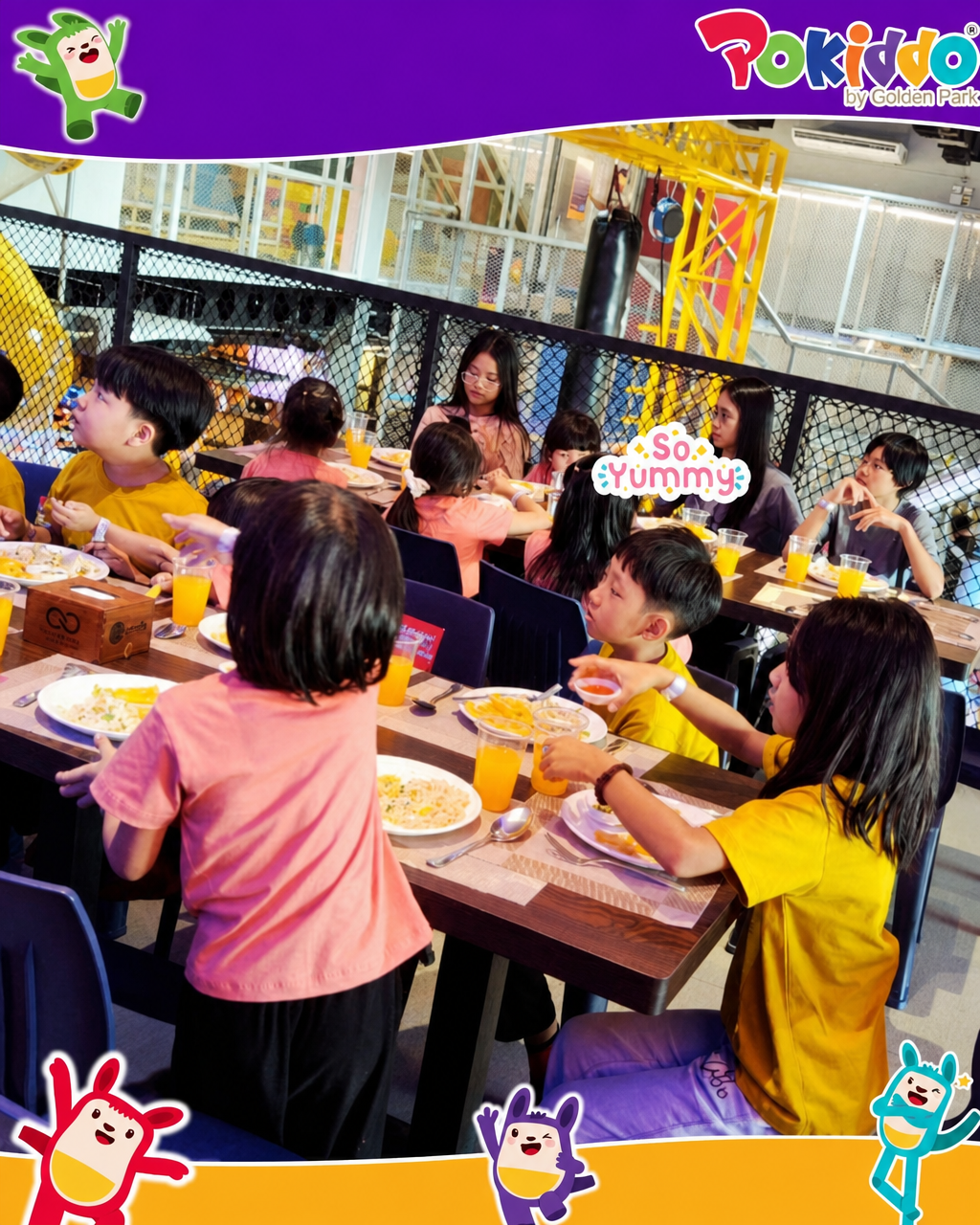
Inside our venues there is no lecture about the importance of exercise. Children chase the light-up floor on their own, race to the climbing wall, and line up for the ninja course. Nobody has to push them; they accumulate their activity while playing.
One mother described the shift: her child used to want to stay home with an iPad on weekends. Now, on Saturday morning, he gets up on his own and asks whether they are going to Pokiddo today.
That is what substitution looks like in practice. Not taking the screen away, but offering something better.

Three Changes That Can Start Today
If screen time is a source of worry in your household, three adjustments are worth trying.
Make rules together rather than imposing a blanket ban. Children who help set the limits are far more likely to respect them.
Use movement as a substitution rather than a punishment. "Ten more minutes, then we go to the trampolines" works considerably better than "Turn it off and go exercise right now."
Find a space your child genuinely likes. Not every child enjoys running or ball games. Very few dislike trampolines, slides, or climbing walls. Find the thing they like, and they will ask to go back.
This summer, rather than arguing about screen time, consider taking your child somewhere they can sweat with a smile on their face.
What This Means for the People Who Build These Venues
Parents cannot solve this problem alone, and that is where the operating side of the industry becomes relevant. Anyone examining how to start a trampoline park in an urban market is, whether they frame it this way or not, answering a question about how families in that city get their children moving. The indoor trampoline park design determines whether a venue can serve that need in bad weather and in peak hours, which is precisely when the need is greatest. The trampoline park equipment mix decides whether children actually choose the space over a screen — a climbing wall and a ninja course hold attention that a single attraction does not.
Venues built to absorb real family demand also tend to hold up commercially. A trampoline park cost plan that accounts for weather-driven and seasonal traffic patterns, rather than assuming ideal conditions, tends to be the more durable one. And for investors weighing a trampoline park franchise cost against a direct engagement with a trampoline park manufacturer, the useful question is whether the partner's operating experience includes venues that run all year in difficult climates. Pokiddo operates more than 60 venues internationally as a trampoline park manufacturer, and much of what we know about weather-proof demand came from markets where the outdoor option disappears for months at a time.
Children will choose movement when movement is easier to choose than the screen. Building that choice is something the industry can do, and something we would like to do more of.