
From Water Festival to School Trips: How Pokiddo Yangon Built a Year-Round Operating Model
During Thingyan, Myanmar's water festival, Pokiddo by Golden Park in Yangon ran its seasonal promotion and brought families through the doors. Festival crowds are the visible story. The one worth studying sits behind them.
Over the past months this venue has quietly built something most indoor parks never manage: the operational capacity to host organized group visits on ordinary working days. NELC School booked trips in December 2025. So did Grace Baptist Church. More institutions keep calling. The reason those bookings exist is a weekday operating model — the part of the business that fills Monday to Friday so the weekends can run full.

The Water Festival Was Standard Procedure
For Thingyan, the park offered a buy-four-get-one-free ticket package, plus bonus tokens for advance bookings, aimed at family walk-ins. This is routine for the store: low-threshold group discounts that nudge families to pool orders, that reward regulars for bringing friends, that push occupancy as high as possible during the peak window.
None of that is remarkable by itself. What makes the Yangon store different from an ordinary park is the baseline underneath — the group business that keeps the venue occupied before the celebration and after it.
School Trips Became the Weekday Engine
Ask the administrators who approve these outings why they keep choosing Pokiddo, and their answers arrive in a particular order.
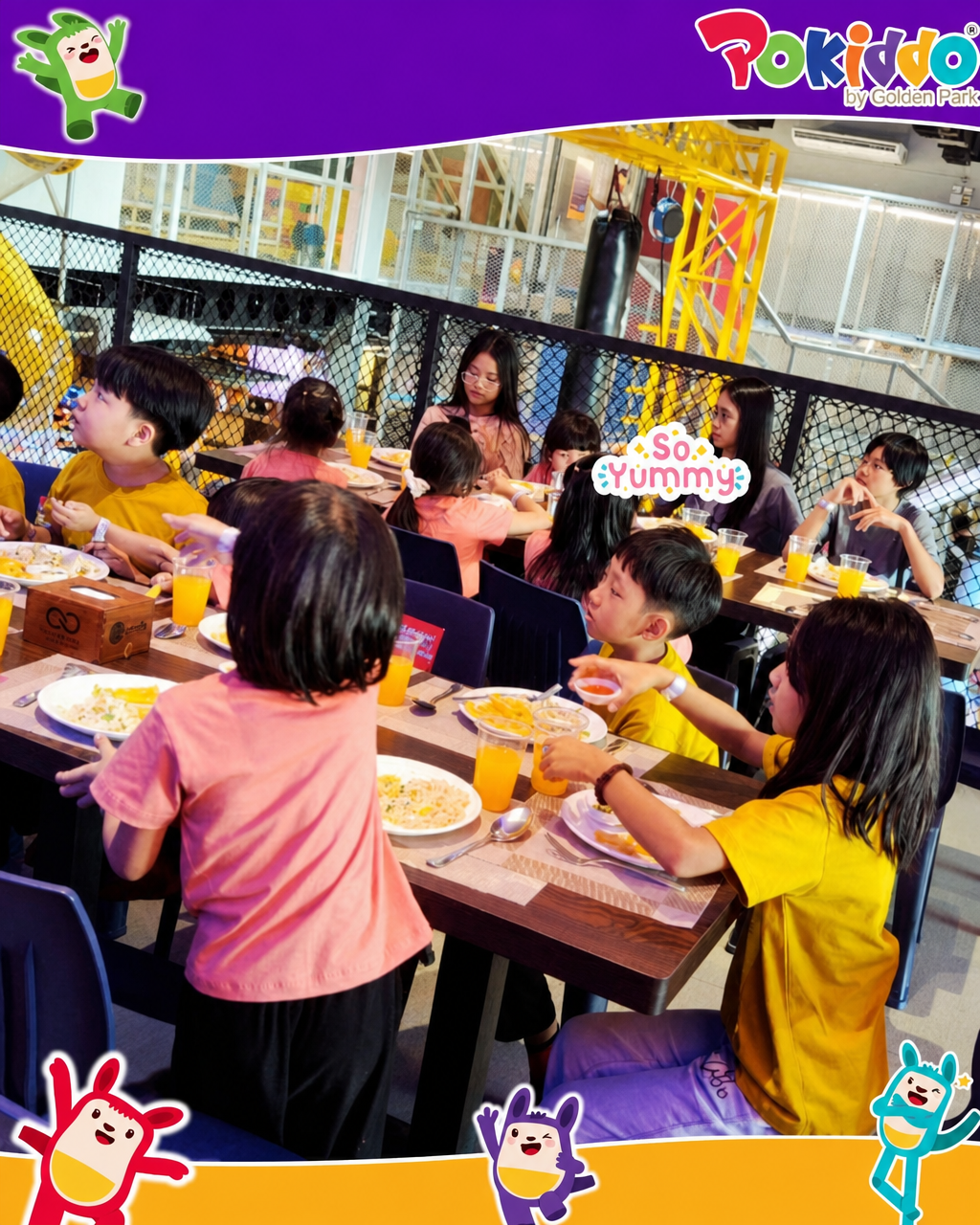
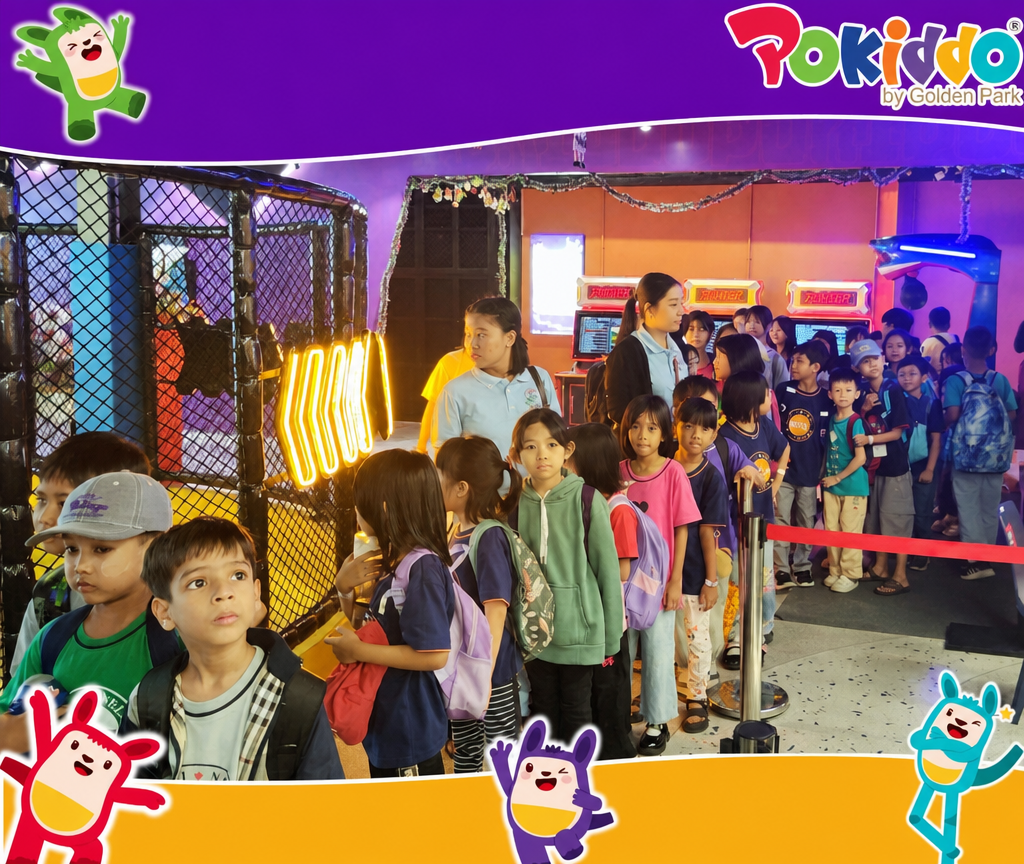
The venue has to hold the whole group. The Yangon park spreads across two levels and can take anywhere from a few dozen to well over a hundred students at once, with sightlines and circulation a teacher can actually supervise. If a school cannot trust the space, nothing else matters.
Then the content has to justify the outing. Schools are under pressure to frame these trips as physical activity rather than free play, and a floor built on trampolines, climbing walls, and soft play gives them exactly that language.
The service side decides whether a school comes back a second time. A professional reception process, attendants posted at the attractions, food handled on site — these are the details that keep a teacher relaxed and a parent unworried.
Underneath all of it sits brand trust. An administrator puts their own name on the permission form, and an international operator with published safety and hygiene standards makes that signature easier to write.
The economics of group business then do the rest. School trips land on working days, which attacks the industry's chronic problem of empty midweek floors. Bookings are confirmed in advance, which turns revenue into something you can forecast. One successful trip reaches dozens of families, which drives weekend walk-ins you did not pay to acquire. And the students who love the visit go home and ask their parents to come back — the group-to-family conversion happens without a single sales call.
Three Tracks, One Calendar
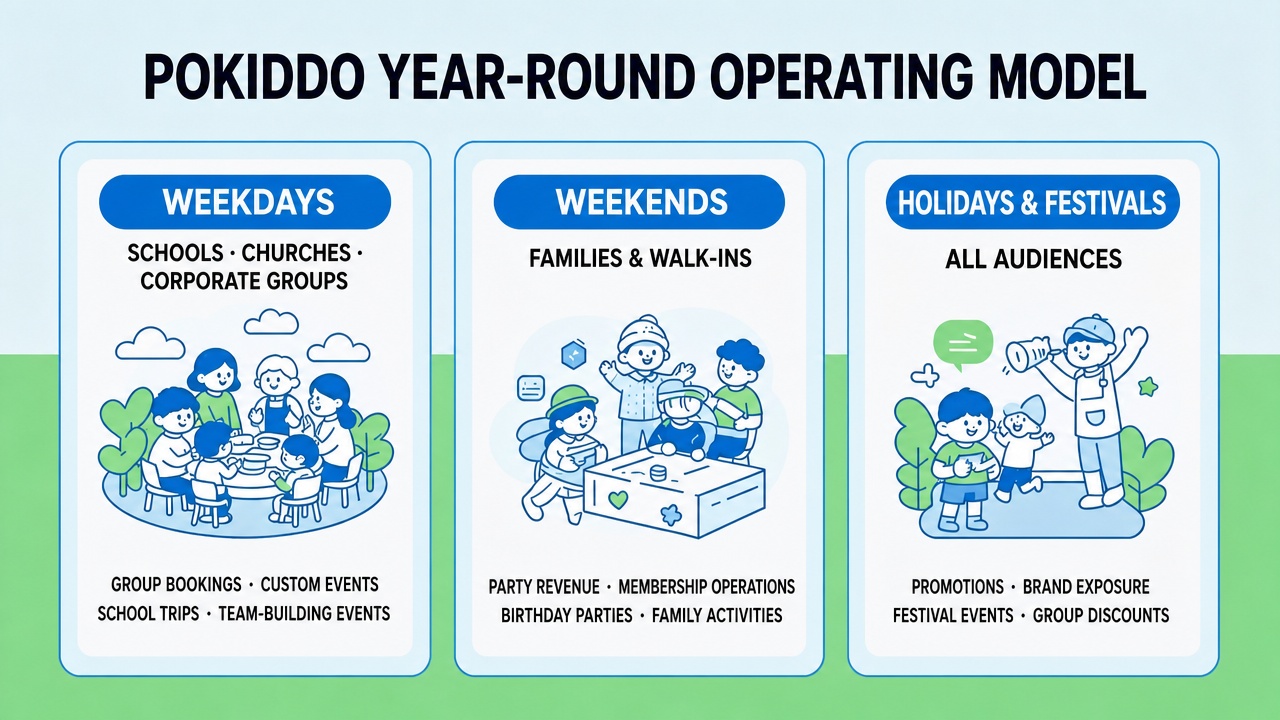
The store runs on three revenue lines, and they lean on each other. Weekdays belong to groups — schools, churches, corporate teams — served through structured reception and custom programming. Weekends belong to family walk-ins, powered by birthday parties and membership activity. Holiday windows like Thingyan belong to everyone, driven by promotions and brand exposure.
Group orders secure the baseline revenue. Family walk-ins contribute most of the profit. Holiday campaigns pull in the new names. Take away any one of the three and the other two start to wobble.
Three Lessons for Investors
The first lesson: the weekday problem is solvable. Too many owners accept empty Mondays as a fact of the industry. The Yangon answer is deliberate outreach — schools, churches, companies — and it does not happen by waiting. Group business requires brand credibility, reception capability, and service standards working together before the first inquiry arrives.
The second lesson: brand is what opens the group door. Schools apply strict criteria to off-campus venues, and safety, hygiene, and service norms top the list. The Yangon store keeps winning contracts because Pokiddo's international identity and standardized operations clear that bar. A venue without a recognized brand struggles to pass the review no matter how good its equipment is.
The third lesson: festival promotions are an amplifier, not a lifeline. The Thingyan campaign worked because the park had spent ordinary weeks building a stable group clientele and a membership base. Promotions multiply what already exists; they cannot manufacture it. Solid daily operations are what let a holiday actually add on top.
The Model Runs All Year
The festival has ended. The school trip bookings are queued up. That sequence, in that order, is the point: a well-run indoor park can serve family walk-ins and organized groups at once, and balance weekdays against weekends, ordinary weeks against holidays. The venues that survive are not the ones with the loudest seasonal campaign. They are the ones whose weekday operations are solid enough that a festival feels like a bonus instead of a rescue.
What a Group-Ready Park Requires Before Opening
This model reaches back into the planning stage, and that is where most parks either build the capability or lose it for good. An investor researching how to start a trampoline park should treat group reception as a design requirement rather than an afterthought. The indoor trampoline park design has to include a check-in flow that absorbs a hundred arriving students without chaos, a supervised zone large enough for a whole cohort, and catering capacity that scales. Those features decide whether a park can say yes when a school calls.
Trampoline park equipment choices carry the same weight. Schools buy programs, not just access, so the floor needs attractions that work under structured supervision as well as in free play. And the trampoline park cost model should budget for the staffing and programming group business demands; a venue that cannot professionally receive two hundred children will not win the contract in the first place.
When investors compare the trampoline park franchise cost with a direct partnership with a trampoline park manufacturer, one question separates the useful conversations from the rest: can the partner point to a working weekday model like Yangon's, or is the offer limited to hardware? Pokiddo operates more than 60 venues worldwide as a trampoline park manufacturer, and the parks we build are designed to run on all seven days — not on the weekend alone.
Build for the weekdays. The weekends will take care of themselves.