Arcade Zones in Indoor Play Parks: Monetize Visitors’ Spare Time
I keep telling operators this, and they keep not believing me until they see it. The loudest, most crowded spot in our Pokiddo Kuwait store? Not the bounce zone. Not the slides. The arcade. Basketball shooters with lines of kids three deep. Racing simulators fully occupied. Claw machines surrounded by tiny strategists and the parents they've dragged in as "advisors."
Here's the part that flips the math: the arcade takes almost no floor space. Yet it converts every scrap of spare time into cash. If you're working out how to start a trampoline park, the arcade loads last in your mental list. It needs to load first.
A Profitable Complement for Well-Rounded Play Parks
The Spend Nobody Planned
Trampolines and climbing walls are the anchors. The arcade feels optional. Until you track the money. A kid finishes bouncing, wiped out, dragging their feet toward the exit—then they spot a basketball machine. Drop. Swish. Drop. Three more coins. Their parent, bored from waiting, tries the claw machine next to it. None of this was budgeted. All of it lands in your pocket.
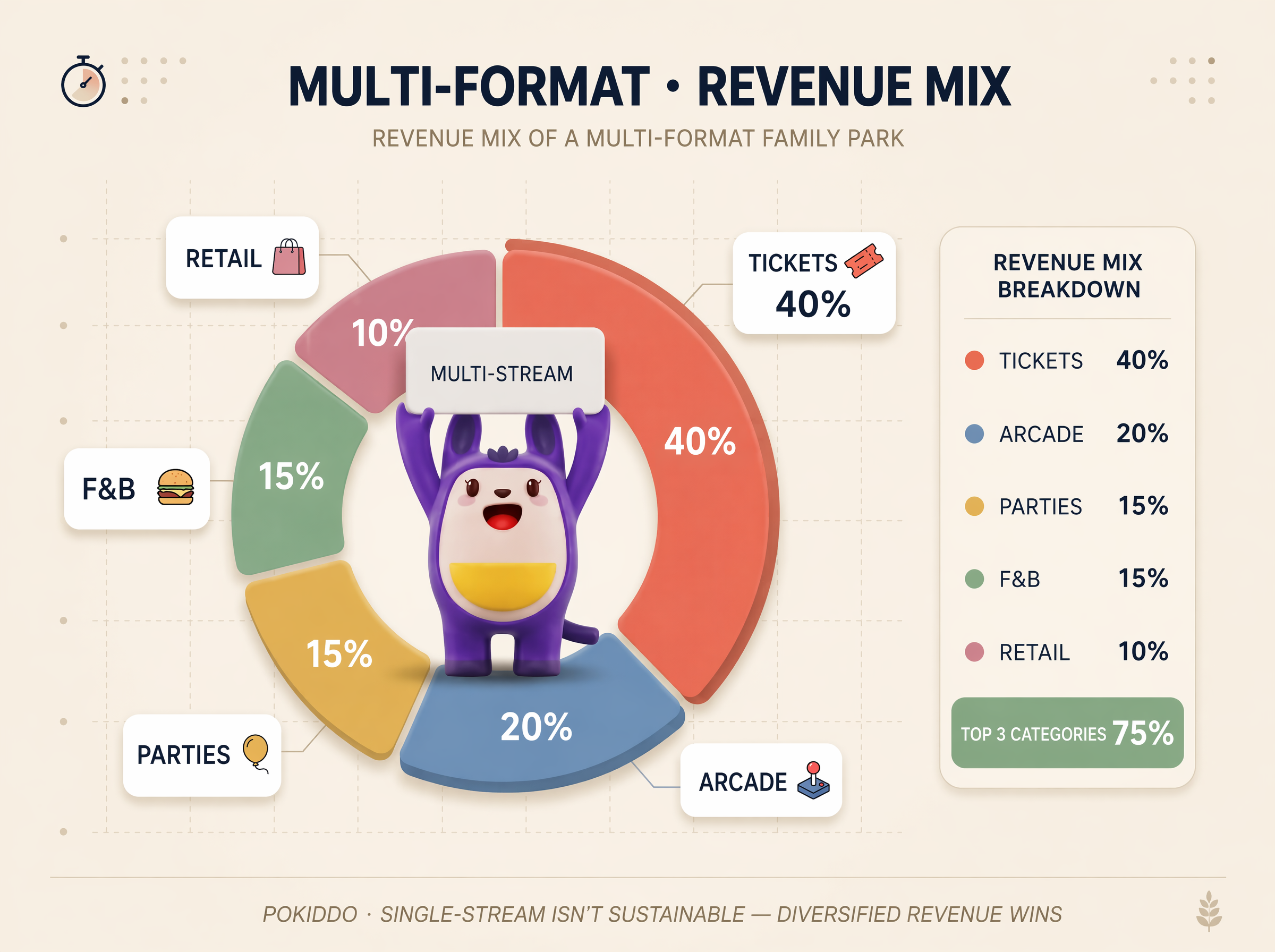
Within any Family Entertainment Center, arcade zones consistently carry the highest gross margins of any segment. They're never the main event. They're where your trampoline park cost gets covered fastest.
What the Arcade Actually Does for Your Park
Most operators think arcade games are a nice little bonus. They miss the three bigger things going on under the surface.
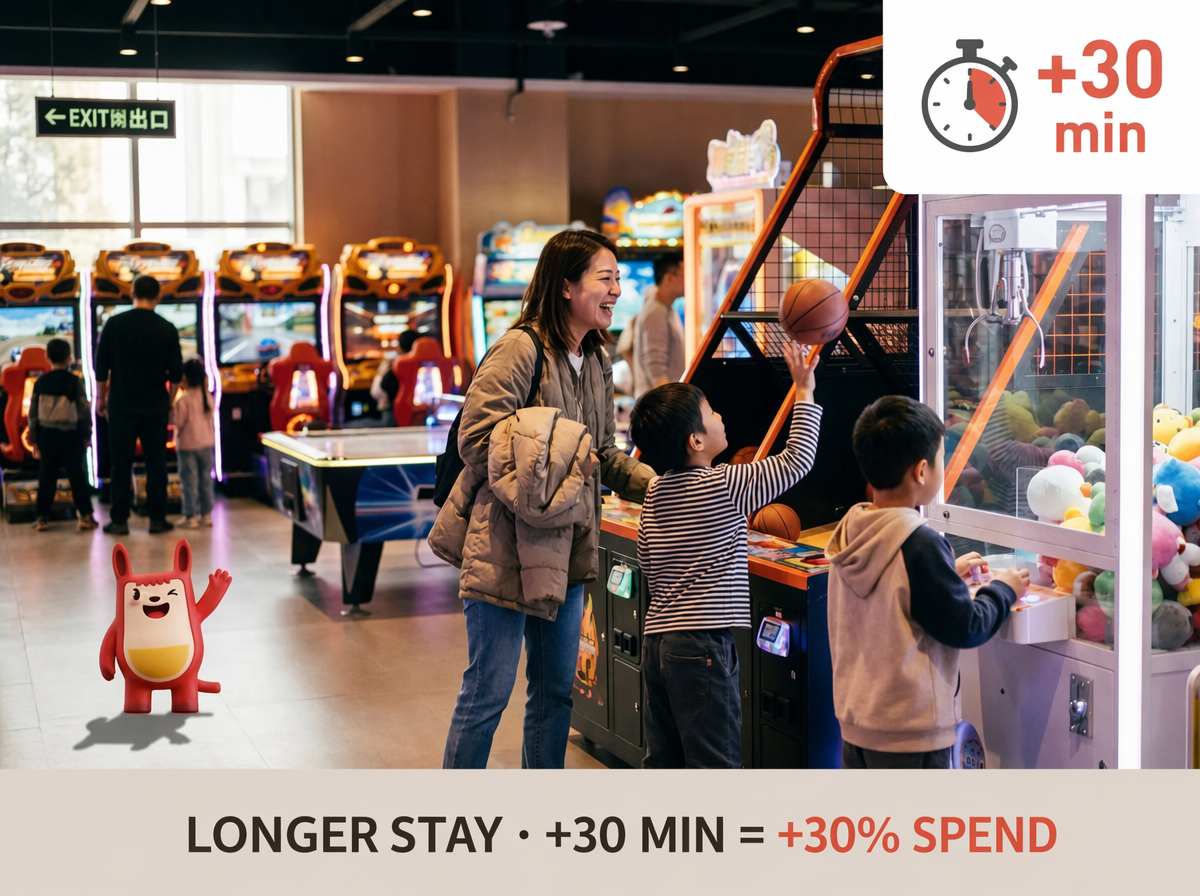
It stretches dwell time. A family does an hour of trampolines, 40 minutes climbing, then the kids clock the arcade by the exit door. That's another 30 minutes in the building. More time always equals more total spend.
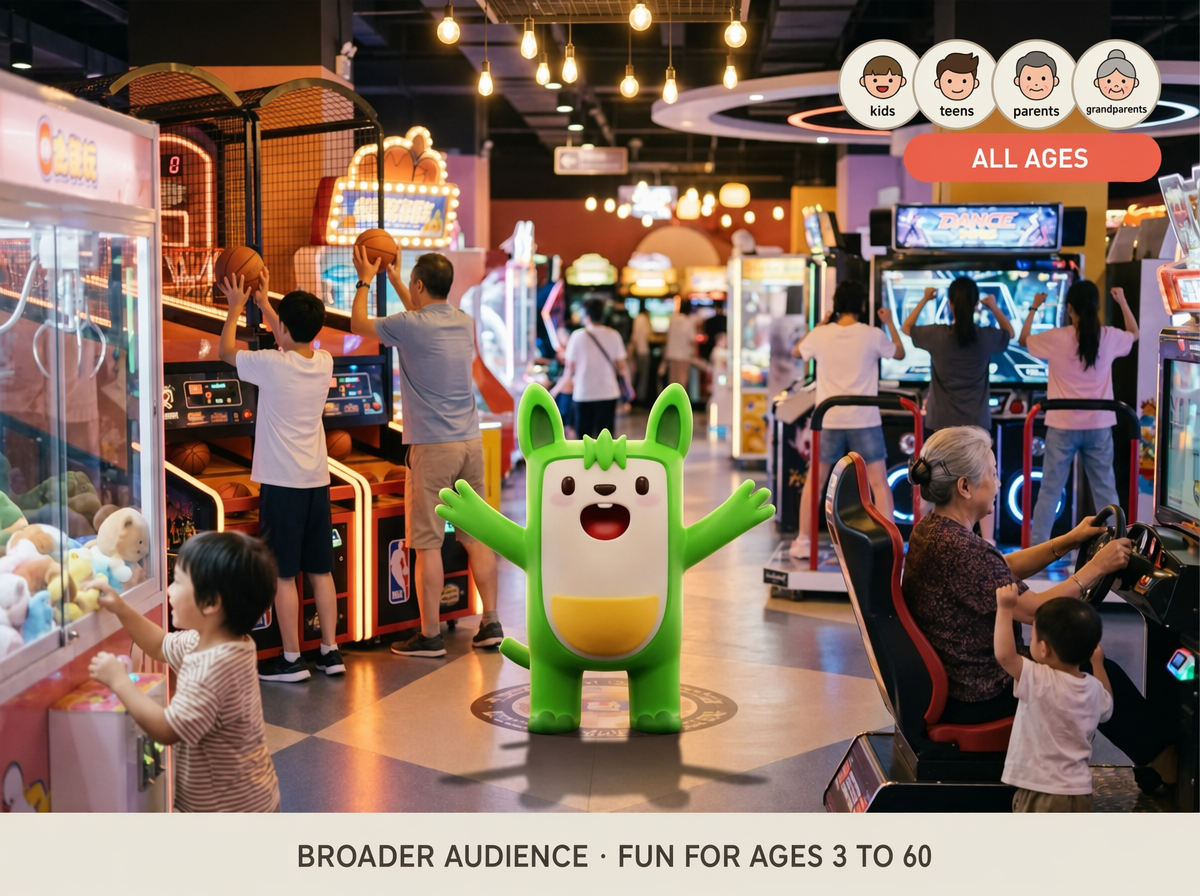
It widens who comes through your doors. Not every kid likes bouncing. Roughly every kid on earth likes claw machines and racing games. The arcade scoops up the quieter kids and gives the adults something to do besides doomscrolling on a bench.
It generates social noise. Kids line up at basketball machines and compete. Crowds gather around claw games yelling instructions. That energy isn't decoration—it's marketing. It transforms your space from a collection of zones into a place that feels alive.
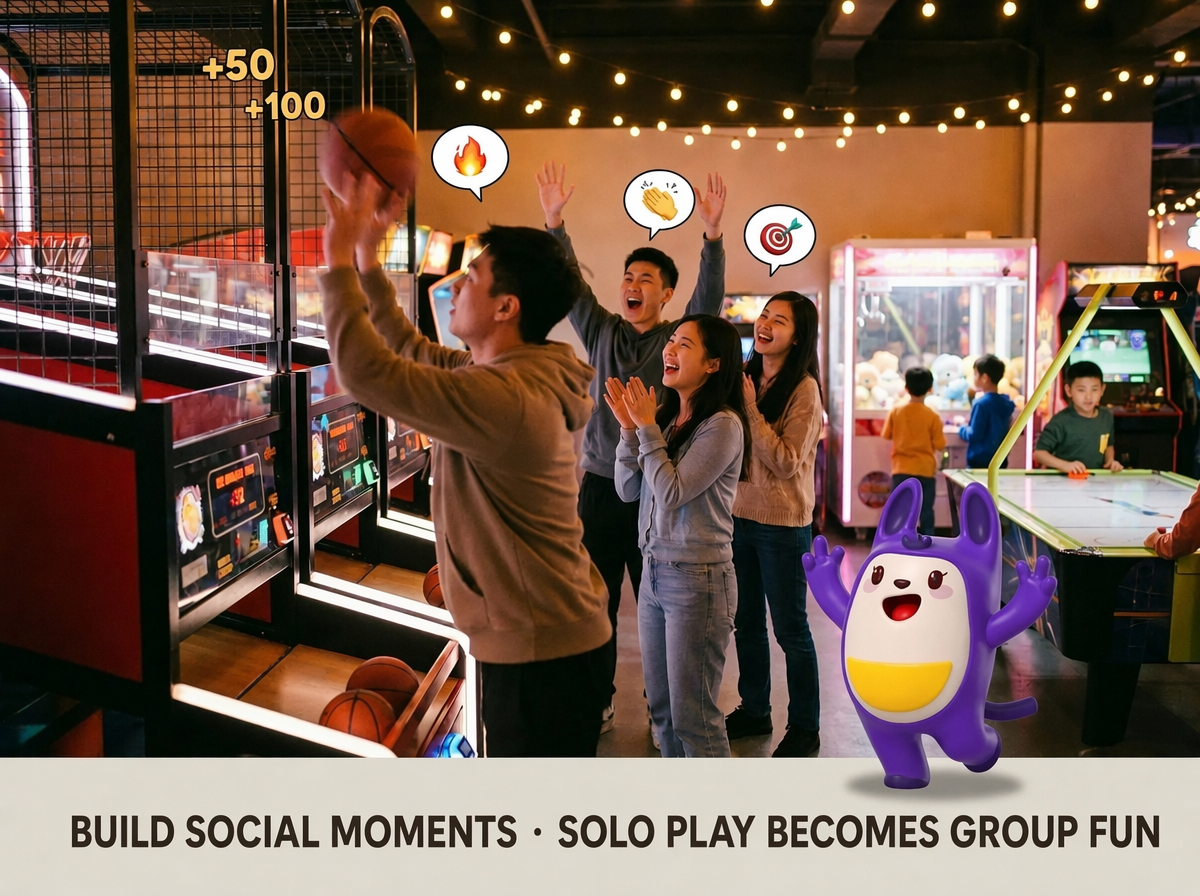
How the Zones Fit Together
As a trampoline park manufacturer with 60-plus locations running globally, we've landed on a zone structure that actually works. A 2,000 sq.m venue breaks down like this:
600 sq.m soft play — anchors the toddler crowd
400 sq.m trampoline zone — pulls teens and adults
200–300 sq.m high-altitude challenge — converts the older kids
200–300 sq.m arcade — secondary spend engine
200–300 sq.m party rooms — highest-margin space in the place
Each piece feeds the next. The trampoline park equipment draws foot traffic. Soft play keeps the youngest crowd happy. High-altitude challenges turn teenagers into regulars. The arcade scoops exit-spend. Party rooms lock in advance bookings with cash upfront.
A thoughtful indoor trampoline park design treats the arcade not as an afterthought crammed into leftover space, but as the bridge between active play and the exit. Kids hit the sports zones, stop for quick games on the way out, and parents grab retail or snacks. Every step in that path generates margin.
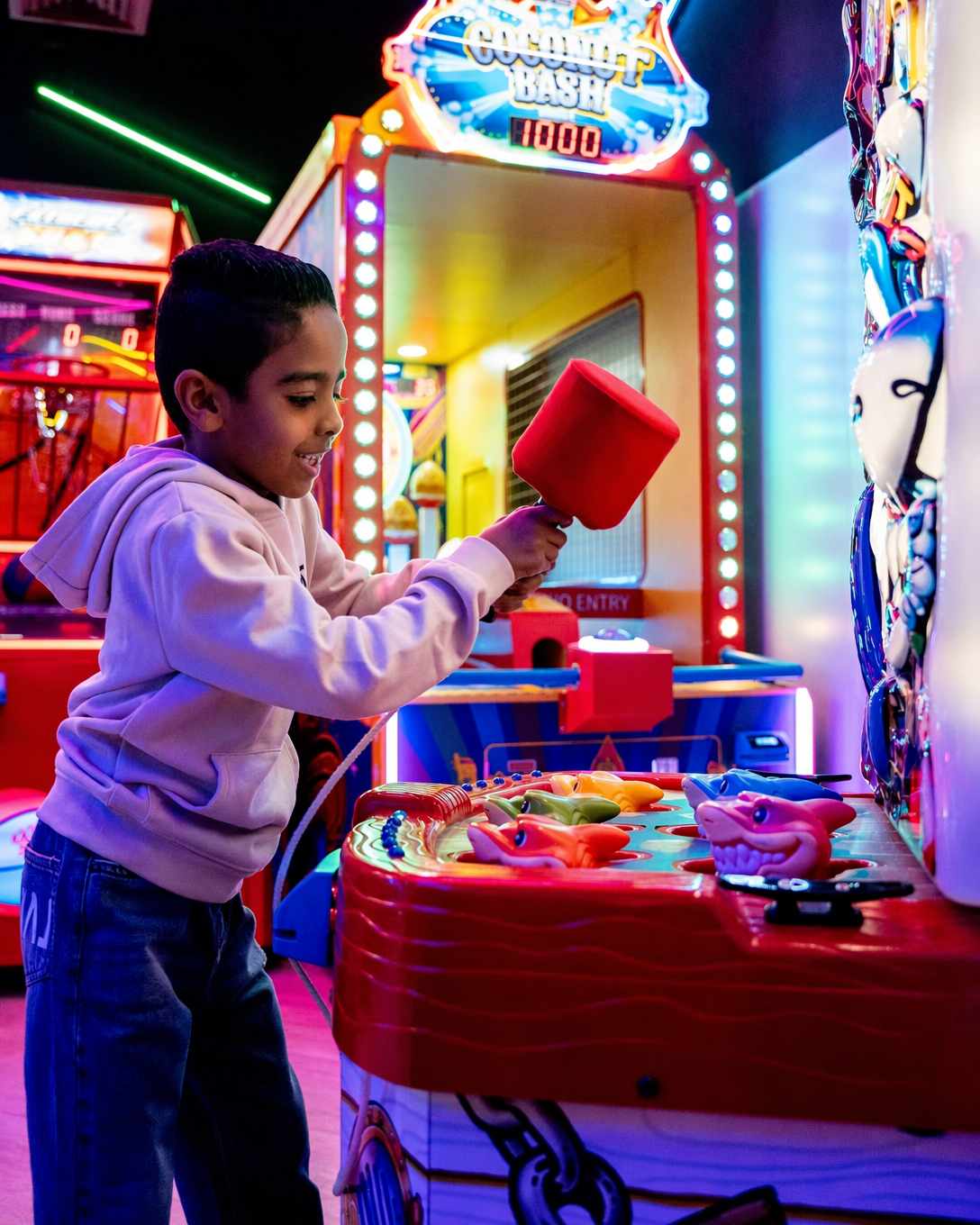
Why Single-Format Parks Lose
A trampoline-only park is a ghost town on a Tuesday. A soft-play-only venue fights low average spend forever. A standalone arcade has zero loyal family base.
An integrated complex with an arcade layer stands on multiple legs. Admission tickets get them in. Arcade captures impulse spend. Party bookings and food power the repeats. When you're sizing up the trampoline park franchise cost, ask one question: does this model lock me into a single format? If the answer is yes, you're buying a ceiling.
We build multi-format venues where the arcade isn't decoration. The packed arcade in Kuwait isn't some weird outlier. It's the model working exactly the way it was designed to.
If you're still sketching floor plans and not sure how every square meter earns its rent, reach out. We share real numbers from 60-plus stores. Not the shiny ones. The honest ones.